Saturday, February 13, 2010

Our Big Fat Greek Future

From CNN.com

The issues leading up to the government financial crisis in Greece:

  • Years of unrestrained spending
  • Cheap lending
  • Failure to implement financial reforms
  • Huge national debt
See the story here

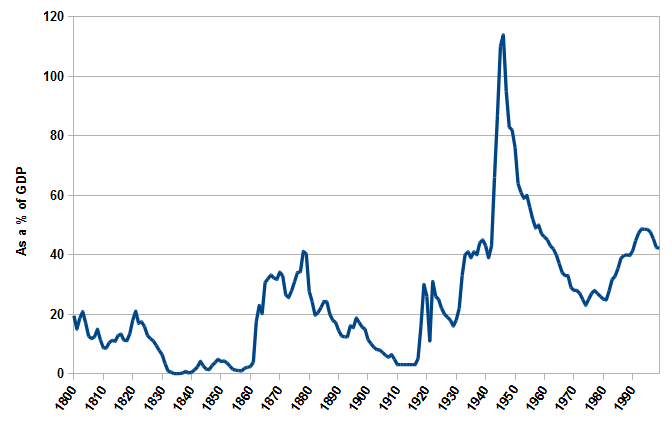
Do these symptoms sound familiar? They should. For instance, just last week Congress and President Obama raised our national debt ceiling to $14,300,000,000,000. Our forcasted GDP for 2010 is about the same (±$14.5 trillion). Not since WWII has our national debt even come close to reaching our annual GDP. Pretty scary since we won't have the luxury of an EU bailout.

Friday, February 12, 2010

Thursday, February 11, 2010

Tuesday, February 9, 2010

Sunday, February 7, 2010

Tea Anyone?

There has been much ado this week regarding the Tea Party convention being held in Nashville, TN. Most pundits now agree that the Tea Party movement is a legitimate force; however, according to most media outlets, the organizers are having a hard time "getting their act together" and "forming a solid platform" with a "positive message." If that is the measure of a successful movement, then the GOP and the Democratic National Party both have a long way to go. What the pundits must understand is that the Tea Party movement has no formal leadership, is not trying to form a "solid platform," and is not attempting to provide a "positive message." This is a grass-roots movement which wants what Bostonian Samuel Adams did in 1773 - freedom from an oppressive and unresponsive government. This ideal is message enough, and does not require a platform.

NPR has a good article on the Tea Party convention and what they hope to accomplish.

Listen to it here.


Saturday, February 6, 2010

Free Trade and the Steel Industry, 1978

Dr. Milton Friedman gives a concise and lucid argument for international free trade at Utah State University in 1978.

Friday, February 5, 2010

Singapore: A Testament to Free Trade


The Discovery Channel is currently showing the "History of Singapore" on their HD Theater network. Among other things, the documentary shows how powerful freedom and free trade can be. Singapore, a small island (275 sq. miles) with no natural resources, has grown to become the 16th largest trading country in the world and 9th richest country in the world (GDP/capita).


If you can not catch in on HD Theater, you may watch the video online below.


Part One


Part Two


Part Three


Part Four


Part Five

Tuesday, February 2, 2010

Wise and Correct Taxation


“The wise and correct course to follow in taxation is not to destroy those who have already secured success, but to create conditions under which everyone will have a better chance to be successful.”

Calvin Coolidge, 30th President of the United States, 1923-1929

Saturday, January 30, 2010

Agree or Disagree

From Bryan Caplan at GMU, three rules for tolerance and honesty in the discussion of ideas:

1. Don't think less of people who sincerely disagree.

2. Do think less of people who insincerely agree.

3. Do think less of people who think less of people who sincerely disagree.

These are as useful in the business world as at GMU.

Friday, January 29, 2010

The Quotable Bastiat


"Who will dare to say that we have been gifted with strength, not to defend our rights, but to destroy the equal rights of our fellow-men?"

From "LAW, Spoilation by", in Cyclopædia of Political Science, Political Economy, and the Political History of the United States, edited by John J. Lalor, first published 1881.

Thursday, January 28, 2010

Get to Know the Boom and Bust

Check out the "Learn More" page at Econstories.tv. Books, articles, and podcasts on Keynes and Hayek.

Make sense of the mess in the modern world.

“The ideas of economists and political philosophers, both when they are right and when they are wrong, are more powerful than is commonly understood. Indeed the world is ruled by little else. Practical men, who believe themselves to be quite exempt from any intellectual influence, are usually the slaves of some defunct economist.”

John Maynard Keynes

Wednesday, January 27, 2010

Economics as Rap

Of all the battles confronting business, perhaps none is more important than the one in popular culture.

Movies, television, and music are powerful influences in shaping public opinion. Oliver Stone can convince more people than the Warren Commission. More people listen to music than read textbooks.

With that perspective in mind, enjoy what may well be the finest example of deep thinking and popular culture, an imaginary rap between the two economists Freidrich Hayek and John Keynes.

Hayek and Keynes held contrasting views of economic policy. Hayek was an advocate of the free market and warned of the dangers caused by easy money and interventionist government policy. Keynes advocated more government intervention to stimulate the economy and liberate it from the control of "animal spirits."

Watch. Enjoy. Learn.

Tuesday, January 26, 2010

An Old Lie

It is hard to believe that the party of President Obama is a direct descendant of the party of Thomas Jefferson.

In a letter to Thomas Cooper in 1802, Jefferson wrote, "If we can prevent the government from wasting the labors of the people, under the pretence of taking care of them, they must become happy."

Is there any better example of the unreliable nature of political parties? How the party of Jefferson became the party publicly committed to "taking care of" people is a lesson in the weakness of political virtue.

But perhaps the fault lies not in the party, but in the people. Perhaps political parties will become whatever kind of party people want the most.

This appears to be Jefferson's view, for in his letter to Cooper, he does not say we must prevent political parties, businesses, or religious institutions from "wasting the labors of the people." He specifically warns against government.

Today, we joke that the phrase "I'm from the government, and I'm here to help you" is one of most popular lies in the world. Reading Jefferson, we see that it is also one of the oldest.

Sunday, January 24, 2010

Buzz Saw

On the fast-fading topic of health care, President Obama said:

"We've gotten pretty far down the road, but I have to admit, we've run into a bit of a buzz saw along the way. The long process of getting things done runs headlong into the special interests, their armies of lobbyists, and partisan politics aimed at exploiting fears instead of getting things done. And the longer it's taken, the uglier the process has looked."

In other words, "Some people dared to disagree."

In business, if the consumer disagrees, you change the product or try another consumer. You do not whine about those who disagree. You do not press them to change their mind in the name of "getting things done."

In fact, business flourishes when consumers disagree. More room for the rest of us, you see. You don't like Starbucks' coffee? How about Seattle's Best, Coffee People, Timothy's, Gloria Jean's, Cafe Altura, Eight O'Clock, Douwe Egberts, Lavazza, Folgers, Jeremiah's Pick, Emeril's, Aloha Island, Gevalia, Wolfgang Puck's, Maxwell House, Yuban, All Day Gourmet, Dunkin Donuts, Peet's, Caribou, Van Houtee...need I go on?

But, if you don't like a particular piece of legislation, you have no choice, nowhere else to go. You have no choice but to resist or accept, and that is hardly a choice. That is the choice of a prisoner or a slave, not the choice of a consumer.

No wonder the President ran into a "buzz saw." We all might breath easier if only there were more of them out there.

Saturday, January 23, 2010

Power as Product

All is fair, when power is the only product, when power is the only justification for existence, when achieving power is a zero-sum game that must be won at all costs.

Witness the political landscape in the United States. Political parties aren't competing for voters; they are competing for power. Voters are merely the means to an end.

Political parties aren't really interested in ideas, either. Ideas are just another means to an end.

Finally, political parties aren't really interested in you. You are just the means to an end.

As George Orwell wrote in 1984, "The Party seeks power entirely for its own sake. We are not interested in the good of others; we are interested solely in power. Not wealth or luxury or long life or happiness: only power, pure power."

What kind of power? Power over the lives of others. Power over their property. Power to make them do what they don't want to do.

Not the kind of power that says "Don't kill" or "Don't steal" or "Don't cheat." Political parties seek the kind of power that says, "You will die" or "I will steal from you" or "I will lie to you," and "you can't stop me."

If it is wise to be skeptical about the claims of business, it is even wiser to be skeptical about the claims of politicians and their parties, even the ones we like. At least consumers have a choice. Voters get stuck with the results for years.

Friday, January 22, 2010

Money on the Dark Side of the Moon

As is often the case, I recently had music playing in the background at my house. This particular morning I had Pink Floyd's Dark Side of the Moon record playing (yes, among other forms of media, I listen to records). As some of you know, the song Money is the first song on side two of the album. As I dropped the needle, it occurred to me that, even though the word "money" has a specific meaning to me in economic terms, I had never really studied the lyrics to this well-known song. So I dared to examine what "money" means to songwriter and bassist Roger Waters of Pink Floyd - at least what it meant to him in the early 1970's when he wrote the song.

By 1973, Pink Floyd had already recorded eight albums, including a movie soundtrack and a #1 album in 1970 called Atom Heart Mother. Therefore, it is safe to assume that when the song was written, Roger Waters was already struggling with his new found fame, and enjoying the money that accompanies a #1 album release.

Now, I am not a lyricist by any means, and I may very well be interpreting the song completely wrong. Nevertheless, with the historical context in place, here is my amateur interpretation of Money by Pink Floyd.

Artist: Pink Floyd

Album: Dark Side of the Moon
Lyrics by: Roger Waters


Click here for to see it performed in London in 1994.

___________________________________________

Original lyrics in bold font

Layman interpretation of the lyrics in normal font

Money, get away

Get a good job with more pay
And you're okay

At first, money is good and it is allows you to live comfortably.

Money, it's a gas
Grab that cash with both hands
And make a stash

Life becomes fun once you have a little disposable income.

New car, caviar, four star daydream
Think I'll buy me a football team

Once you become wealthy, your wants become a little more expensive - sometimes they seem absurd (i.e. buying a football team). But, who are we to judge him on his wants.

Money get back
I'm all right Jack
Keep your hands off my stack

With wealth comes friends, agents, managers, and obligations. These people are normally looking for an easy handout.

Money, it's a hit
Don't give me that
Do goody good b&ll$h!t

There are no shortage of suggestions as to how you should spend your money. Even though keeping your money for yourself is considered "greedy" to some.

I'm in the hi-fidelity
First class traveling set
And I think I need a Learjet

It's funny how
wants become needs. He "wanted" a football team, and now he "needs" fancy luggage and a Learjet to match. However, again, who are we to judge him on his wants and needs - it's his money.

Money, it's a crime

Share it fairly
But don't take a slice of my pie

Once you become rich, it is easy to judge others and tell them how to live and spend their money, but leave his lifestyle out of it - remember it's his success.

Money, so they say
Is the root of all evil
Today

But if you ask for a rise

It's no surprise that they're
Giving none away

Those who do not have money, and some that do, point to money as the "root of all evil." But, if you notice, they rarely part with theirs. It's fairly easy to sit back judge others based on what they do (or don't do) with their money. But, in reality, it is their money, and they should be allowed to spend it on football teams, matching luggage, Learjets, or maybe even give it all away to charity. Besides, the common man enjoys watching football, making luggage, and building Lear jets.

In the end, money is not the "root of all evil"; however, mandating what one does with their money is not far from it.


______________________________________________________________
A quick note: In a 1987 interview, Roger Waters was asked, "Apart from [being successful as a band] what were the main problems associated with such immense success?"

"Mainly the one of what to do with all the money!" he answered, "You go through this thing where you think of all the good you could do with it by giving it away. But, in the end, you decide to keep it!"


Thursday, January 21, 2010

To Preserve a Free Society


“If we wish to preserve a free society, it is essential that we recognize that the desirability of a particular object is not sufficient justification for the use of coercion”

Friedrich August von Hayek

Wednesday, January 20, 2010

Same Old Idea

Coming soon, from the kind of progressive thinking that brought you "the worst car in history."

"Reliable, no-frills health care."

"Health care designed to make new economic sense."

"Everybody needs health care sometime."


and the marketing slogan that says it all...

"Introducing the same old idea."

Honestly, you can't make this stuff up.

As the Economist writes, "The idea of a reliable, no-frills car from an exotic source attracted millions of dollars’ worth of media coverage.

The only flaw was the car itself. Even after strenuous efforts to raise quality control at the Zastava plant, it was still hopelessly unreliable, and obsolete by the standards of the modern auto industry. The verdict of outside commentators was damning and unanimous. For the price of a new Yugo, consumers would find a second-hand car (of almost any kind) better value."

Tuesday, January 19, 2010

The Moral Choice

"Suppose, for example, that someone is a devout Muslim who is anxious to have as many people as possible bow to Mecca three times a day; to him let us suppose this is the highest moral act. But if he wields coercion to force everyone to bow to Mecca, he is thereby depriving everyone of the opportunity to be moral — to choose freely to bow to Mecca. Coercion deprives a man of the freedom to choose and, therefore, of the possibility of choosing morally."

Murray Rothbard, For a New Liberty, pages 104-105.

Monday, January 18, 2010

IEA Climate Change Debate

From the London-based Institute of Economic Affairs, the granddaddy of free-market think tanks and one founded by a business intellectual.

Videos of the presentations at the IEA Climate Change Debate are available. The participants discussed the question: “Do Science and Economics Support Government Action on Climate Change?”

Each speaker provided a different perspective on the economics or the science. Debating the topic (in the order of the videos below) were: Prof. Fred Singer from Science and Environmental Policy Project; Nigel Lawson from The Global Warming Policy Foundation; Prof. Mike Hulme from the University of East Anglia; and Dr. Sam Frankhauser from the London School of Economics.

You can play the individual speeches or play a video of all four speakers.

Prof. Fred Singer
Nigel Lawson
Prof. Mike Hulme
Dr. Sam Frankhauser
All Four Speakers

Sunday, January 17, 2010

When in Doubt, Blame a Banker

Below is an interview with Treasury Secretary Timothy Geithner regarding the proposed Bank Tax. Among other things, it exposes the fact that the federal government obviously made no provisions to recoup TARP funds. However, when the Troubled Asset Relief Program was passed, I remember them saying it was an "investment" and that taxpayers would "benefit" in the long-run. Well, now the government is turning to their old friend (taxes) to vilify and punish the banking industry.

The first question that came to my mind was, what about the banks that were forced to take TARP funds? For example, according to former BB&T CEO John Allison, BB&T did not request nor did they want TARP funds. However, they, among several other healthy and responsible banks, were summoned into a closed-door meeting with the Treasury Department and essentially forced to receive funds. This was in an effort to hide which banks were stable and which were on the brink of failure. Naturally, BB&T was among the first to repay their TARP funds. Therefore, it doesn't seem "fair" (to use the parlance of our times) that they should now be taxed for receiving the TARP funds?

The more obvious question may be, what about the other industries which received bailouts? Shouldn't we tax the automobile or the insurance industries? Or should we continue rewarding GM for continuing to fail?

At one point, all the TARP recipients were "too important to fail." Obviously they are not too important to vilify and throw under the bus. Or was that the point? Maybe the plan all along was to bail out the important industries in order to rob them of their sovereignty and enable the federal government to use them as political punching bags, fiscal scapegoats, and enact targeted policy in the name of taxpayer fairness. Okay, maybe that wasn't the plan, but it sure is becoming a very convenient strategy for the current administration.

Well, enough from me - see a sample of the interview below, and click on the link to read the entire transcript.


From MoneyControl.com


In an exclusive interview, Treasury Secretary Timothy Geithner, discusses the reason behind this move. He also talks about the risk of a double-dip recession and the unemployment rate.

Q: Jamie Dimon said you should not have tax policy that punishes individual firms.

A: This policy is not designed to punish. It is designed to meet the simple, practical, legal obligation, and we are doing it in a way, I think, it makes economic sense because we are doing it in a way that is, in effect, a tax on leverage, it is a tax on risk in some ways, and it is borne by the people that benefited most from the crisis. That seems fair.

Q: Do you have any concern that this tax will have any damaging effect on the economy, on lending? And if not, why not make it higher, since we have got a rather large budget deficit right now?

A: Let me start with the second. The ultimate costs of solving this financial crisis are going to be dramatically lower than anybody thought was possible. But a financial crisis like this caused a lot of damage, there is still going to be some cost. But the legal obligation is to make sure we cover that cost. So, conservative estimates, the cost of the crisis may be in the range of USD 100 million, slightly higher. So this is designed to make sure we cover those costs. That is why we did the size this way.

Click here for the entire interview.

Saturday, January 16, 2010

Plunder

The law can be an instrument of equalization only as it takes from some persons and gives to other persons. When the law does this, it is an instrument of plunder.

~ The Law, by
Frederic Bastiat

Below is a sampling of new or revised tax proposals since the Fall of 2009:

  • Reinstate 36 and 39.6 percent rates for high-income taxpayers
  • Reinstate personal exemption phaseout and limitation on itemized deductions for high-income taxpayers
  • Impose 20 percent rate on capital gains and dividends for high-income taxpayers
  • Limit value of itemized deductions to 28%
  • Reduce the tax gap and make reforms
  • Tax carried interest as ordinary income
  • Codify “economic substance” doctrine
  • Reform U.S. international tax system
  • Repeal first-in-first-out (FIFO)
  • .15% Tax on banking profits to repay TARP
  • Climate revenues (i.e. Cap and Trade)
Information on most of these tax proposals can be found here.

Friday, January 15, 2010

Close to Nature

Most of the commentary on the situation in Haiti understandably focuses on the immediate effects of the earthquake. We are deeply disturbed by the suffering of our fellow human beings.

But there is a larger, longer running tragedy at work here. We call it poverty. Poverty is what "being close to nature" really looks like.

Behind the popular romance of nature as a pretty park where happy creatures play lurks the awful truth. Nature is not cruel, but it is clumsy, indifferently stumbling over land and people alike.

We can only love such a thing after we have contained its potential to do us harm. That does not come from prayers and worship; it comes from wealth and the security that wealth provides.

Earthquake relief does not make a nation wealthy. Wealth comes from the peaceful and profitable trade of individuals.

Until Haitians can securely own and trade property, they will continue to face the harrowing prospect of one disaster after another, one relief program after another, with no end in sight.

Thursday, January 14, 2010

The Long Shadow of Frédéric Bastiat

"Frédéric Bastiat's legacy has two key components: his artful polemics for free markets and his uncompromising conviction that men's interests are "naturally harmonious" to the extent that their property rights are respected. He was an artist with an unfailing loyalty to logic, and a revolutionary who fought the interventionist schemes of both the Right and Left despite suffering from a debilitating terminal illness."

From "The Long Shadow of Frédéric Bastiat" by George Smith, at Mises Daily.

Wednesday, January 13, 2010

Stopping Terror Costs Jobs!

From The Onion, evidence that some satire never goes out of style:


BREAKING: Terror Attack Failure Costs Detroit 10,000 Construction Jobs

Monday, January 11, 2010

John Stossel on Ayn Rand

Given the topic of our last meeting, last week's episode of "Stossel" on the Fox Business channel was rather timely. Thanks to Dr. Jennifer Baker for a fantastic presentation, and also reminding me to post this link.


Parts 2-6 can be found here.

Sunday, January 10, 2010

An Intellectual Adventure

"It may be that a free society as we have known it carries in itself the forces of its own destruction, that once freedom has been achieved it is taken for granted and ceases to be valued, and that the free growth of ideas which is the essence of a free society will bring about the destruction of the foundations on which it depends. There can be little doubt that in countries like the United States the ideal of freedom today has less real appeal for the young than it has in countries where they have learned what its loss means. On the other hand, there is every sign that in Germany and elsewhere, to the young men who have never known a free society, the task of constructing one can become as exciting and fascinating as any socialist scheme which has appeared during the last hundred years. It is an extraordinary fact, though one which many visitors have experienced, that in speaking to German students about the principles of a liberal society one finds a more responsive and even enthusiastic audience than one can hope to find in any of the Western democracies. In Britain also there is already appearing among the young a new interest in the principles of true liberalism which certainly did not exist a few years ago.

Does this mean that freedom is valued only when it is lost, that the world must everywhere go through a dark phase of socialist totalitarianism before the forces of freedom can gather strength anew? It may be so, but I hope it need not be. Yet, so long as the people who over longer periods determine public opinion continue to be attracted by the ideals of socialism, the trend will continue. If we are to avoid such a development, we must be able to offer a new liberal program which appeals to the imagination. We must make the building of a free society once more an intellectual adventure, a deed of courage. What we lack is a liberal Utopia, a program which seems neither a mere defense of things as they are nor a diluted kind of socialism, but a truly liberal radicalism which does not spare the susceptibilities of the mighty (including the trade unions), which is not too severely practical, and which does not confine itself to what appears today as politically possible. We need intellectual leaders who are willing to work for an ideal, however small may be the prospects of its early realization. They must be men who are willing to stick to principles and to fight for their full realization,however remote. The practical compromises they must leave to the politicians. Free trade and freedom of opportunity are ideals which still may arouse the imaginations of large numbers, but a mere "reasonable freedom of trade" or a mere "relaxation of controls" is neither intellectually respectable nor likely to inspire any enthusiasm.

The main lesson which the true liberal must learn from the success of the socialists is that it was their courage to be Utopian which gained them the support of the intellectuals and therefore an influence on public opinion which is daily making possible what only recently seemed utterly remote. Those who have concerned themselves exclusively with what seemed practicable in the existing state of opinion have constantly found that even this had rapidly become politically impossible as the result of changes in a public opinion which they have done nothing to guide. Unless we can make the philosophic foundations of a free society once more a living intellectual issue, and its implementation a task which challenges the ingenuity and imagination of our liveliest minds. But if we can regain that belief in the power of ideas which was the mark of liberalism at its best, the battle is not lost. The intellectual revival of liberalism is already underway in many parts of the world. Will it be in time?"

From "The Intellectuals and Socialism" by F. A. Hayek, 1949

Saturday, January 9, 2010

Why I Drive

1. Jonah Goldberg writes accurately of air travel outside of first class...

"The petty humiliations, the routine deceptions from airline employees desperate to rid themselves of troublesome travelers (“Oh, they can definitely help you at the gate!”), the stress-position seats, the ever-changing rules for what can and cannot be in your carry-on, being charged for food that the Red Cross would condemn if it were served at Gitmo: Air travel is the most expensive unpleasant experience in everyday life outside the realm of words ending in -oscopy."

2. While the TSA adds more frustration than security...


3. Finally, once glamorous air travel has become a bus system with wings.

Not entirely a business, not entirely an organ of the state, not profitable, not credit-worthy, not reliable, not customer friendly, not consistent, rewarding to run but not to invest in, the airline industry is everything you would expect from an economic arrangement that encourages the same kind of moral behavior you find on French farms and in dictatorships receiving large amounts of foreign aid.

Friday, January 8, 2010

Bubble Warning

from the Economist

The False Boom

In 2008, falling markets caused a vicious circle of debt defaults and fire sales by investors, pushing asset prices down even further. The market rebound was necessary to stabilize economies last year, but now there is a danger that bubbles are being created.

[The] more immediate risks may be posed by fiscal policy. Many governments responded to the crisis by, in effect, taking the debt burden off the private sector’s balance-sheets and putting it on their own. This caused a huge gap to open up in government finances. Deficits in America and Britain, for instance, stand at more than 10% of GDP.

The Real Bust

Markets have already tested the ability of the weakest governments to bear the burden of their debt. Dubai had to turn to its wealthy neighbor, Abu Dhabi, for help. In the euro zone, doubts have been raised about the willingness of Greece to push through the required austerity measures. Electorates are likely to chafe at the cost of bringing down government deficits, especially if the main result is to repay foreign creditors. That will lead to currency crises and cross-border disputes like the current spat between Iceland, Britain and the Netherlands over the bill for compensating depositors in Icelandic banks. Such disputes will lead to further outbreaks of market volatility.

Investors tempted to take comfort from the fact that asset prices are still below their peaks would do well to remember that they may yet fall back a very long way. The Japanese stock market still trades at a quarter of the high it reached 20 years ago. The NASDAQ trades at half the level it reached during dot-com mania. Today the prices of many assets are being held up by unsustainable fiscal and monetary stimulus. Something has to give.

Read the Entire Article Here


Thursday, January 7, 2010

No Apology Necessary

"The truth is that capitalism has not only multiplied population figures but at the same time improved the people’s standard of living in an unprecedented way. Neither economic thinking nor historical experience suggest that any other social system could be as beneficial to the masses as capitalism. The results speak for themselves. The market economy needs no apologists and propagandists. It can apply to itself the words of Sir Christopher Wren’s epitaph in St. Paul’s: Si monumentum requires, circumspice." [“If you seek his monument, look around.”]11

Ludwig von Mises, Human Action

Tuesday, January 5, 2010

Bastiat Society Meeting - January 6th

Please join us in welcoming Dr. Jennifer Baker from the College of Charleston. She will be discussing her recent paper published in the Journal of Libertarian Studies, entitled:

"Money is the Product of Virtue: Tensions in Rand's Invocation of Market Success"

Please RSVP by emailing us here (bastiatsociety@gmail.com).

About Dr. Jennifer Baker:

Jennifer Baker is a graduate of Brown University (B.A. in Philosophy and Political Science, 1995) and the University of Arizona (Ph.D., 2003).

Her research is on virtue ethics, and she looks to ancient ethical theories as positive examples of how ethics ought to be done today. She teaches courses on ethical and political theory, environmental ethics and philosophy, business ethics, bioethics, and American philosophy.

Saturday, January 2, 2010

The Quotable Bastiat

Voulez-vous que la loi remédie à tout ? C’est impossible ; il faudrait alors dire qu’un marchand qui attend, pour vendre son café, son sucre, de meilleurs temps, nuit à la société ; il faudrait donc invoquer toujours la loi, toujours l’État !

Discours sur la répression des coalitions industrielles

"Do you want the law to cure everything? It is impossible; in that case, we must say that a merchant who waits for a better time to sell his coffee or his sugar harms society. Then we must always invoke the law and call upon the state to intervene."

Speech on the Suppression of Industrial Combinations

Thursday, December 31, 2009

Government Motors - A Day in Headlines

GM Replacing Top Lobbyist With Two Former AT&T Executives
CNNmoney.com

GM Recalls Corvette Models to Fix Roof Panel
consumeraffairs.com

GM Recalls Equinox, Terrain Models
consumeraffairs.com

US Treasury Gives $3.8 Billion More To GMAC
CNNmoney.com

Merit Pay Returning to GM
The Detroit News

"I don't know anything about cars."
- Ed Whitacre, GM's Government Appointed Chairman

Wednesday, December 30, 2009

Robbed for Their Own Benefit

"Ever since the advent of representative government placed the ultimate power to direct the administration of public affairs in the hands of the people, the primary instrument by which the few have managed to plunder the many has been the sophistry that persuades the victims that they are being robbed for their own benefit. The public has been despoiled of a great part of its wealth and has been induced to give up more and more of its freedom of choice because it is unable to detect the error in the delusive sophisms by which protectionist demagogues, national socialists, and proponents of government planning exploit its gullibility and its ignorance of economics."

From "Preface to the English Language Edition" by Arthur Goddard, in Economic Sophisms by Bastiat.

Tuesday, December 29, 2009

A Vain and Empty Hope

"Conservatives have often placed their central hopes in big businessmen. This view of big business was most starkly expressed in Ayn Rand’s dictum that “Big Business is America’s most persecuted minority.” Persecuted? With a few honorable exceptions, big business jostles one another eagerly to line up at the public trough. Does Lockheed, or General Dynamics, or AT&T, or Nelson Rockefeller feel persecuted?

Big business support for the Corporate Welfare-Warfare State is so blatant and so far-ranging, on all levels from the local to the federal, that even many conservatives have had to acknowledge it, at least to some extent. How then explain such fervent support from “America’s most persecuted minority?” The only way out for conservatives is to assume (a) that these businessmen are dumb, and don’t understand their own economic interests, and/or (b) that they have been brainwashed by leftliberal intellectuals, who have poisoned their souls with guilt and misguided altruism. Neither of these explanations will wash, however, as only a glance at AT&T or Lockheed will amply sho w. Big businessmen tend to be admirers of statism, to be “corporate liberals,” not because their souls have been poisoned by intellectuals, but because a good thing has thereby been coming their way. Ever since the acceleration of statism at the turn of the twentieth century, big businessmen have been using the great powers of State contracts, subsidies and cartelization to carve out privileges for themselves at the expense of the rest of the society. It is not too farfetched to assume that Nelson Rockefe ller is guided far more by self- interest than he is by woolly- headed altruism. It is generally admitted even by liberals, for example, that the vast network of government regulatory agencies is being used to cartelize each industry on behalf of the large firms and at the expense of the public. But to salvage their New Deal world-view, liberals have to console themselves with the thought that these agencies and similar “reforms,” enacted during the Progressive, Wilson, or Rooseveltian periods, were launched in good faith, with the “public weal” grandly in view. The idea and genesis of the agencies and other liberal reforms were therefore “good”; it was only in practice that the agencies somehow slipped into sin and into subservience to private, corporate interests. But what Kolko, Weinstein, Domhoff and other revisionist historians have shown, clearly and thoroughly, is that this is a piece of liberal mythology. In reality, all of these reforms, on the national and local levels alike, were conceived, written, and lobbied for by these very privileged groups themselves. The work of these historians reveals conclusively that there was no Golden Age of Reform before sin crept in; sin was there from the beginning, from the moment of conception. The liberal reforms of the Progressive-New Deal-Welfare State were designed to create what they did in fact create: a world of centralized statism, of “partnership” between government and industry, a world which subsists in granting subsidies and monopoly privileges to bus iness and other favored groups.

Expecting the Rockefellers or the legion of other favored big businessmen to convert to a libertarian or even a laissez-faire view is a vain and empty hope. But this is not to say that all big businessmen, or businessmen in general, must be written off. Contrary to the Marxists, not all businessmen, or even big businessmen, constitute a homogeneous economic class with identical class interests. On the contrary, when the CAB confers monopoly privileges on a few large airlines, or when the FCC confers a monopoly on AT&T, there are numerous other firms and businessmen, small and large, who are injured and excluded from the privileges. The conferring of a monopoly of communications on AT&T by the FCC, for example, for a long while kept the now rapidly growing data communications industry stagnating in infancy; it was only an FCC decision to allow competition that enabled the industry to grow by leaps and bounds. Privilege implies exclusion, so there will always be a host of businesses and businessmen, large and small, who will have a solid economic interest in ending State control over their industry. There are therefore a host of businessmen, especially those remote from the privileged “Eastern Establishment,” who are potentially receptive to free market and libertarian ideas."

From For a New Liberty by Murray Rothbard

Copyright © 1973, 1978 by Murray N. Rothbard, and 2002 this online edition by The Ludwig von Mises Institute. Used with permission.

Friday, December 25, 2009

Passed, but Unpopular

Best headline of the day:

"Health Care Bill That Is Hated by Liberals, Conservatives, Libertarians, Socialists, Christians, Feminists, the Media and the American People Passes Senate"

Reason, Hit and Run.

Thursday, December 24, 2009

Anniversary of Bastiat's Death


HERE LIES

FREDERIC BASTIAT


representative of the people to Parliament,
Correspondant of the Institute of France,
born in Bayonne in 1801,
died in Rome on 24th December 1850.

Parliament will miss such an enlightened and conscientious representative,
political economny, such an eminent exponent
of its purest doctrines and of the harmony of its laws.
His family will only find consolation for such a painful separation
in the memory of his Christian death


in pace

Tuesday, December 22, 2009

Reliving the Crash of '29

Mises Daily: Monday, December 21, 2009
by Murray N. Rothbard


[First published in
Inquiry, November 12, 1979]

A half-century ago, America — and then the world — was rocked by a mighty stock-market crash that soon turned into the steepest and longest-lasting depression of all time.

It was not only the sharpness and depth of the depression that stunned the world and changed the face of modern history: it was the length, the chronic economic morass persisting throughout the 1930s, that caused intellectuals and the general public to despair of the market economy and the capitalist system.

Previous depressions, no matter how sharp, generally lasted no more than a year or two. But now, for over a decade, poverty, unemployment, and hopelessness led millions to seek some new economic system that would cure the depression and avoid a repetition of it.

Political solutions and panaceas differed. For some it was Marxian socialism — for others, one or another form of fascism. In the United States the accepted solution was a Keynesian mixed-economy or welfare–warfare state. Harvard was the focus of Keynesian economics in the United States, and Seymour Harris, a prominent Keynesian teaching there, titled one of his many books Saving American Capitalism. That title encapsulated the spirit of the New Deal reformers of the '30s and '40s. By the massive use of state power and government spending, capitalism was going to be saved from the challenges of communism and fascism.

Read the Entire Article Here


Monday, December 21, 2009

Better Business Defense

If they want to improve the reputation of business, business people have to change the way they talk about it. So says The Economist.

A column entitled "The Silence of Mammon" says business can no longer rely on blaming "a few bad apples." Nor can it rescue its reputation by doing public good deeds -- that looks like appeasement -- and it can't win converts by boasting that business creates wealth. For those who don't place wealth high up on the scale of virtues, the argument rings hollow.

A better defense of business would focus on three things:

First, business is a remarkable exercise in co-operation.

Second, business is a creative act.

Third, business promotes pluralism.

Read the column here.

Sunday, December 20, 2009

The Keynes Debate....continues....


Lord Robert Skidelsky and Professor Russ Roberts debate the legacy of government intervention and share their views on why markets fail.

Watch the entire conversation here

Saturday, December 19, 2009

Copenhagen Cover

Copenhagen is a cover for "uglier agendas," says Jonha Goldberg in the National Review:

"Bolivian president Evo Morales was interviewed by Al Jazeera television while in Copenhagen. “The principal obstacle to combating climate change is capitalism,” he explained. “Until we put an end to capitalism, it will continue to be a big obstacle for life and humanity.”

Zimbabwean dictator Robert Mugabe proclaimed in a speech: “When these capitalist gods of carbon burp and belch their dangerous emissions, it’s we, the lesser mortals of the developing sphere, who gasp and sink and eventually die.”

Right. That is, unless Mugabe kills them first.

The big name in the anti-capitalism club was, of course, Hugo Chávez, the Venezuelan national-socialist strongman. In a typical stem-winder, he belched: “Capitalism is a destructive model that is eradicating life, that threatens to put a definitive end to the human species.”

I don’t know how to say “chutzpah” in Spanish, but you’ve got to hand it to the leader of the world’s No. 5 supplier of oil for bemoaning the system that keeps his regime afloat by buying his product."

Friday, December 18, 2009

2010 - 2011 Koch Associate Program

The Koch Associate Program is a challenging job opportunity for professionals who are passionate about free-market ideas and want to become more effective at advancing liberty throughout their careers. During the year-long program, each Associate works in a full-time, paid position with a market-oriented think tank, policy institute, or grassroots organization; while also receiving valuable management training in a seminar setting one day out of each week at the Charles G. Koch Charitable Foundation. For more information, visit www.cgkfoundation.org/associate-program.

Thursday, December 17, 2009

Fruits of Public Service

"...there is a robust job market in Washington for former Democratic congressmen with good political skills. Members of Congress make $174,000 a year; heads of trade associations make upward of $741,000 and don't have to return to home districts on weekends."

Michael Barone, washingtonexaminer.com

Tuesday, December 15, 2009

If We Can Put a Man on the Moon...

From reason.tv, a look at a new book that asks the question "If we can put a man on the moon, then why does government screw up everything else?"

Monday, December 14, 2009

Shut Up and Go Away

Witness a new era of respect for civil disobedience, via Big Government:

Sunday, December 13, 2009

Top 20 Debtor Nations

Source: CNBC

http://www.cnbc.com/id/33506526

Gross External National Debt and % of GDP

20. United States – $13.454 trillion or 94.3% of GDP


19. Hungary - $207.92 billion or 105.7% of GDP

18. Australia - $800.2 billion or 111.3% of GDP

17. Italy - $ 1.823 trillion or 126.7% of GDP

16. Greece - $343 billion or 161.1% of GDP

15. Spain - $1.403 trillion or 171.7% of GDP

14. Germany - $2.918 trillion or 178.5% of GDP

13. Finland - $193.5 billion or 188.5% of GDP

12. Sweden - $344.3 billion or 194.3% of GDP

11. Norway - $275.4 billion or 199% of GDP

10. Hong Kong - $306.6 billion or 205.8% of GDP

9. Portugal - $236.5 billion or 214.4% of GDP

8. France - $2.128 trillion or 236% of GDP

7. Austria - $329.5 billion or 252.6% of GDP

6. Denmark - $203.6 billion or 298.3% of GDP

5. Belgium - $389 billion or 320.2% of GDP

4. Netherlands - $672 billion or 365% of GDP

3. United Kingdom - $2.226 trillion or 408.3% of GDP

2. Switzerland - $316.7 billion or 422.7% of GDP

1. Ireland -$188.4 billion or 1,267% of GDP

See the depressing slideshow here

Saturday, December 12, 2009

God Bless You, Mister Scrooge

I've always felt a certain sympathy for Ebenezer Scrooge.

As villains go, he really isn't that bad. He doesn't steal, he doesn't murder, and he doesn't ask the government or anyone else to do either one for him.

In fact, there are qualities in his unreformed character that are downright heroic. He might be a little rough in his people skills, but remember this was a long time before How to Win Friends and Influence People.

Scrooge is all Wharton and no Stanford. That doesn't make a guy bad, just completely misunderstood by people who don't like numbers.

Frankly, Scrooge deserves better treatment than being scared into giving his money away.

At last he gets it. God Bless You, Mister Scrooge!: A pro-Capitalist Christmas Carol, is a play that asks important and long overdue questions:

Why is Scrooge so successful if he’s such a villain?

If Bob Cratchit is so abused, why doesn’t he get a different job?

Just what is Scrooge supposed to do about Tiny Tim’s crutch?

The New York Times says of the play:

"Janet Hopf actually elevates the old miser in her interesting “God Bless You, Mister Scrooge!,” in which the fellow who in Dickens is so easily manipulated by those ghosts is given a backbone. He debates economics with the apparitions, offers capitalism’s arguments against encouraging people to rely on handouts, and apologizes for nothing.

“My wealth is a measure not of what I take from the world but what I give to it,” he says. Jan-Peter Pedross is quite good as Scrooge, and Marley’s ghost (Marc Geller) is creepy as can be, making the already chilly La Tea Theater at the Clemente Soto Vélez Cultural Center on the Lower East Side even more so."

A few other comments:

"If I could see it, I'm sure I'd love it." Ayn R.

"No taxpayers were harmed in the making of this show."

December 4-20, Wednesday-Saturday, 8pm, Sundays at 3pm.

La Tea Theater
Clemente Soto Velez Cultural Center
107 Suffolk Street, Second Floor
New York

Tickets $10 in advance, available at Theatermania.com
$15 at the door

Friday, December 11, 2009

Thursday, December 10, 2009

The New Lexicon

Skeptic (skep-tic): noun

1. a person of superior intelligence, analytical gifts, moral insight, critical judgement, political importance, scientific training, and great physical beauty who doubts the truth of religion, UFOs, and paranormal events. Synonyms: genius, Einstein, sage, scholar, thinker, guardian, protector, hero.

2. a stupid, selfish, and immoral neanderthal driving around in an SUV who stubbornly ignores the wisdom of his betters when it comes to the self-evident truth of anthropomorphic climate change. Synonyms: denier, disbeliever, doubter, kook, criminal, murderer, Republican.

Wednesday, December 9, 2009

Shifting and Filling

You may not have heard of Thomas Kuhn, but you have certainly heard the terms he made famous.

The Harvard-educated PhD in physics was the first to use the now ubiquitous terms "paradigm" and "paradigm shift" to describe the way science really works. Kuhn argued that science does not work the way most scientists say it does. Instead of open-minded scientists accumulating objective conclusions from an unbiased analysis of the evidence, Kuhn saw science as a particular kind of culture, one where scientists evaluate evidence through a reigning paradigm. Kuhn called this "normal science."

No paradigm lasts forever. Errors accumulate, and the accumulation of anomalies causes the paradigm to breakdown. This leads to philosophical and methodological arguments, often nasty ones. This is what Kuhn called "extra-ordinary science." From this kind of science emerges a new paradigm. The paradigm shifts.

Kuhn's view of science is especially important today. We are told that the science is settled on many issues, most notably the issue of climate change. But what if Kuhn was right? What if the only thing settled is the paradigm through which scientists view the evidence? Then the most responsible thing a scientist could do is not to cover up the anomalies in the data, but to look for an entirely new paradigm revealed by the anomalies. In Kuhn's words, stop thinking in terms of normal science, and think extra-ordinarily.

In the same way that commercial revolutions do not come from meekly accepting the words of those who are already commercially successful, scientific revolutions do not come from meekly accepting the words of those who are scientifically successful.

The commercial entrepreneur has much in common with his scientific cousin. Both see what other people don't. Both destabilize settled worlds. Both create work for those who exploit and extend the useful life of new ideas. In the business world, we call those people managers. In the world of science, perhaps we should distinguish between entrepreneurial and managerial scientists. One shifts the paradigm, the other just fills it in.

As the advocates of anthropomorphic climate change regularly remind us, the drama of the climate debate recalls the great scientific revolutions of the past. However, the respective roles of hero and villain are not quite as clearly defined as they would like. Just who is the new Galileo, and who is playing the part of the Catholic Church?

Tuesday, December 8, 2009

Propagandistic Lockstep

George Will on climate change...

"...never in peacetime history has the government-media-academic complex been in such sustained propagandistic lockstep about any subject."

Read the whole thing here.

Monday, December 7, 2009

The Pretense of Knowledge

BY WALTER WILLIAMS for Creators.com

The ultimate constraint that we all face is knowledge — what we know and don't know. The knowledge problem is pervasive and by no means trivial as hinted at by just a few examples. You've purchased a house. Was it the best deal you could have gotten? Was there some other house you could have purchased that 10 years later would not have needed extensive repairs or was in a community with more likeable neighbors and a better environment for your children? What about the person you married? Was there another person who would have made for a more pleasing spouse? Though these are important questions, the most intelligent answer you can give to all of them is: "I don't know."

Since you don't know the answers, who do you think, here on Earth, is likely to know and whom would you like to make these decisions for you — Nancy Pelosi, Harry Reid, George Bush, a czar appointed by Obama or a committee of Washington bureaucrats? I bet that if these people were to forcibly make housing or marital decisions for us, most would deem it tyranny.

You say, "Williams, Congress is not making such monumental decisions that affect my life." Try this. You are a 22-year-old healthy person. Instead of spending $3,000 or $4,000 a year for health insurance, you'd prefer investing that money in equipment to start a landscaping business. Which is the best use of that $3,000 or $4,000 a year — purchasing health insurance or starting up a landscaping business — and who should decide that question: Nancy Pelosi, Harry Reid, George Bush, aczar appointed by Obama or a committee of Washington bureaucrats? How can they possibly know what's the best use of your earnings, particularly in light of the fact that they have no idea of who you are?

Read the entire article here.

Sunday, December 6, 2009

Federal Debt: A Real Hockey Stick Chart


Via Hit and Run, this chart comes from Reason columnist and Mercatus Center economist Veronique de Rugy, writing in The American.

Saturday, December 5, 2009

Hypothetical Machiavellian Advice

From Bryan Caplan at Econlog:

"Suppose a politician wanted to cynically take advantage of voter irrationality to gain their support for costly measures to fight global warming. What would his most effective strategies be?

One of my answers: Loudly announce that industry, not consumers, will pay the price."

Friday, December 4, 2009

Field of Dreams

The government stimulus field of dreams: if you build it, they will come...and they will stop going anywhere else.

Onvia Senior Vice President and Chief Information Officer Eric Gillespie told the Washington Times, "We've seen businesses go from viewing the government as the last client standing, and now we are hearing government spending is a key part of their business strategies. There is almost a philosophical shift in the industry where more and more businesses, large, medium and small as a result of the stimulus and their realizing there is a large, untapped revenue stream where they haven't been focused before."

Onvia is a Seattle-based company that monitors the government's contracting activity.

Thursday, December 3, 2009

Hide the Decline

What does an ambitious climatologist do when the data doesn't cooperate with his thesis of anthropogenic global warming?

Wednesday, December 2, 2009

They Dare Call It Science

Intimidation. Blacklisting. Fudging the numbers. Destroying the evidence. Ignoring the law.

And they dare call it science.

Patrick J. Michaels of George Mason University and a Senior Fellow at the Cato Institute discusses the climate data breach on WIBC's The Garrison Show (Indianapolis, IN).

Listen here.

Tuesday, December 1, 2009

The Quotable Bastiat

Il ne pouvait donc s'introduire dans la Société un plus grand changement et un plus grand malheur que celui-là: la Loi convertie en instrument de spoliation.

"It is impossible to introduce into society a greater change and a greater evil than this: the conversion of the law into an instrument of plunder.

La Loi/The Law