


 from NPR:
by Chana Joffe-Walt
This is a story about how an economist and his buddies tricked the people of Brazil into saving the country from rampant inflation. They had a crazy, unlikely plan, and it worked.
Twenty years ago, Brazil's inflation rate hit 80 percent per month. At that rate, if eggs cost $1 one day, they'll cost $2 a month later. If it keeps up for a year, they'll cost $1,000.
In practice, this meant stores had to change their prices every day. The guy in the grocery store would walk the aisles putting new price stickers on the food. Shoppers would run ahead of him, so they could buy their food at the previous day’s price.
The problem went back to the 1950s, when the government printed money to build a new capital in Brasilia. By the 1980s, the inflation pattern was in place.
It went something like this:
1. New President comes in with a new plan.
2. President freezes prices and/or bank accounts.
3. President fails.
4. President gets voted out or impeached.
5. Repeat.
The plans succeeded at only one thing: Convincing every Brazilian the government was helpless to control inflation.
There was one more option that no one knew about. It was dreamed up by four guys at the Catholic University in Rio. The only reason they enter the picture now — or ever — is because in 1992, there happened to be a new finance minister who knew nothing about economics. So the minister called Edmar Bacha, the economist who is the hero of our story.
____________________________________________________
Listen to the story HERE.
Tuesday, October 5, 2010
A Real Printing Problem

Sunday, September 19, 2010
Bastiat Reference in Chicago Tribune
"[In Chicago] the 5 percent sales tax forgiveness on back-to-school purchases last month, as study after study confirms, only shifts spending from other time frames with no net gain in sales. Ditto for last year's dollop — cash for clunkers — and this year's homebuyer tax credit.
In each of these examples, a politician or legislative body was either seeking to do good — reduce energy consumption, make something more affordable or put more money in workers' pockets — or was perhaps duped by, or just pandering to, a special-interest group or constituency.
As 19th century French economist Frederic Bastiat put it, "There is only one difference between a bad economist and a good one: The bad economist confines himself to the 'visible' effect; the good economist takes into account both the effect that can be seen and those effects that must be 'foreseen.'
The same bad vs. good demarcation holds for political candidates, city halls, lawmakers and public agencies."
Allen R. Sanderson of the University of Chicago, Chicago Tribune
Sunday, September 5, 2010
Labor (verb):
1a : expenditure of physical or mental effort especially when difficult or compulsory
b (1) : human activity that provides the goods or services in an economy (2) : the services performed by workers for wages as distinguished from those rendered by entrepreneurs for profits
_____________________________________________________
A thought on labor:
Your labor is your most valuable asset: Capitalism compensates you for it, and socialism steals it from you.
Enemies of freedom and liberty often accuse entrepreneurs and capitalists of "exploiting" the working-class. Profits and greed, they argue, inevitably pit the employer and employee against each other. Nothing could be farther from the truth. Yet, contempt for the employer and fear are the tools socialists use to spread their own ideals. Once the workers are convinced that capitalism is evil, they then look to the government for the wealth and security that capitalism once provided.
Below are some various quotes regarding labor, wages, and profit. As you read them, ask yourself which group (capitalists or socialists) truly value the worker, the product of their labor, and the entrepreneurial spirit:
_____________________________________________________
"On the basis of political economy itself, in its own words, we have shown that the worker sinks to the level of a commodity and becomes indeed the most wretched of commodities; that the wretchedness of the worker is in inverse proportion to the power and magnitude of his production..."
- Karl Marx (1844) on the Political Economy
"We have stopped thinking in terms of a minimum wage. That belongs to yesterday, before we quite knew what paying high wages meant. Now so few people get the minimum wage that we do not bother about it at all. We try to pay a man what he is worth and we are not inclined to keep a man who is not worth more than the minimum wage."
- Henry Ford (1912) on Minimum Wages
"To establish, that in cases of even one unexcused day's absence from work, the worker should be fired from the enterprise or establishment, with loss of the right to use ration and commodity cards issued to him as a worker in said enterprise or establishment, and likewise with loss of the right to use an apartment given him in the housing of said enterprise or establishment."
- Resolution of the Central Executive Committee and the Council of People's Commissars of the USSR (1932)
“We do want more, and when it becomes more, we shall still want more. And we shall never cease to demand more until we have received the results of our labor.”
- Samuel Gompers, leader and first President of the American Federation of Labor (AFL) (1850-1924)
"Rather, it has been the risk-takers, the doers, the makers of things -- some celebrated, but more often men and women obscure in their labor -- who have carried us up the long rugged path towards prosperity and freedom."
- Barrak Obama (Jan 8th, 2009)
"Reckless greed and risk taking … must never endanger our prosperity again"
- Barrak Obama (Jan 20th, 2009) (Notice the contradiction...?)
"I think myself that we have more machinery of government than is necessary, too many parasites living on the labor of the industrious."
- Thomas Jefferson (1743-1826) on the role of government
"These capitalists generally act harmoniously and in concert, to fleece the people."
- Abraham Lincoln (1809-1865)
"Opportunity is missed by most people because it is dressed in overalls and looks like work."
- Thomas Edison (1847-1931) on hard work and commitment
"The people who are doing the work are the moving force behind the Macintosh. My job is to create a space for them, to clear out the rest of the organization and keep it at bay.
- Steve Jobs, CEO of Apple (1955- )
"Particular obstructive workers who refuse to submit to disciplinary measures will be subject, as non-workers, to discharge and confinement in concentration camps."
- Article 9 of a decree, signed by Lenin (14 November 1919)
"No one would have any argument with government, provided that his person was respected, his labor was free, and the fruits of his labor were protected against all unjust attack. When successful, we would not have to thank the state for our success. "
- Frederic Bastiat (1850) The Law
Saturday, September 4, 2010
Trade Makes Us Less Likely to Kill
Michael Shermer writes in the Huffington Post:
"Trade makes us less likely to kill our potential trading partners. As Jared Diamond once told me about his research on Papua New Guinea hunter-gatherers: "Should you happen to meet an unfamiliar person in the forest, of course you try to kill him or else to run away. Our modern custom of just saying hello and starting a friendly chat would be suicidal." And yet something happened in the 1960s to bring about more peaceful interactions. Initially, peace was imposed upon the native New Guineans by fiat from the Western colonial government that ruled over the territory, but officials then insured continued peace by providing goods that the people needed, as well as the technologies to enable them to continue producing more resources on their own. In less than one generation, New Guinean hunter-gatherers who were fighting each other with stone tools were suddenly New Guinean consumer-traders operating computers, flying planes, and running their own small businesses. Where goods crossed New Guinea frontiers, New Guinea armies did not.
This is an example from my book of what I call Bastiat's Principle, from an observation by the 19th-century French economist Frédéric Bastiat: "Where goods do not cross frontiers, armies will." Although trade is not a sure-fire prophylactic against between-group conflict (there are exceptions to Thomas Friedman's observation that two countries with MacDonalds don't fight, but as a first order approximation it is accurate), it is an integral component to establishing trust between strangers that lessens the potential volatility that naturally exists whenever groups come into contact with one another, especially over the allocation of scare resources that have alternative uses, the very definition of economics.
And that brings us back full circle to trade, markets, and morality."
Monday, August 30, 2010
Thursday, August 12, 2010
Sunday, July 18, 2010
Wednesday, June 30, 2010
Saturday, June 26, 2010
The Quotable Bastiat
"The State is also subject to Malthus’s Law. It tends to exceed the level of its means of existence, it expands in line with its means and what keeps it in existence is the substance of the people. Misfortune thus afflicts those peoples who cannot limit the sphere of action of the State. Freedom, private activity, wealth, well-being, independence and dignity will all disappear."
Via http://bastiat.net/en/
Thursday, June 24, 2010
A Radical Obesity Hypothesis
Part One: Where food is hard to get, expensive, and it tastes bad, very few people get fat.
Part Two: Where food is plentiful, affordable, and it tastes good, lots of people get fat.
Monday, June 21, 2010
What Went Wrong at BP
"BP put form over substance and took their eye off the ball. Beyond Petroleum was a failed corporate strategy that resulted in heedless, dumb cost-cutting that put profits losses ahead of people and the environment.
Reality can be a harsh mistress. BP went after an environmental fad, basked in the glow of the Left environmental movement, and now may have destoyed itself in the process. As with Enron, another ‘progressive’ ‘green’ company, the Left environmentalists got what they deserved.
If only John Browne had given a Lee Raymond-type speech and had conducted BP’s business in the manner of its more reality-grounded brethren. The blame for the fatal attraction goes deep, and it lands at the doorstep of the mainstream environmental movement that got BP into greenwashing."
Rob Bradley, at MasterResource, a free-market energy blog.
Sunday, June 20, 2010
Markets Are Like Wives

Markets are like wives. They will tell you what to do, but you won't always like what you hear.
The Conversation by Henri Matisse, 1908-1912. Source: State Hermitage Museum
Tuesday, June 15, 2010
The Free Dictionary
Organized Crime noun [awr-guh-nahyzd krahym]
1. Interstate theft that occurs within a centrally controlled formal structure.
2. The people and the groups involved in such criminal activities; e.g., the Mafia in Sicily and the Legislature in the United States.
Tuesday, April 13, 2010
Cutting Communism - One Head at a Time

Cuba continues to be in the news. It appears that Raul Castro understands the pitfalls of communism more than his brother. First, Raul lifted restrictions on Cuban farmers, now he is letting Cuban barbershops work for profit.
Questions:
Can the U.S. re-learn the benefits of a free market from Cuba? Or will the lessons learned there fall on deaf ears?
Why does the media portray capitalism as evil in free societies, yet celebrate when communist countries turn capitalistic?
___________________________________________________
By Michael Voss BBC News, Havana
Cuba is turning over hundreds of state-run barber shops and beauty salons to employees in what may be the start of a long-expected privatisation drive.
All barbers and hairdressers in shops with three seats or fewer will be allowed to rent the space and pay taxes instead of getting a monthly wage.
The retail sector has long been derided for poor service and rampant theft.
The country's former President, Fidel Castro, nationalised all small businesses in 1968.
'Slow and cautious'
Now his younger brother and successor Raul Castro is trying to modernise the system without jumping to full-scale capitalism.
Other communist countries such as China and Vietnam have long since pushed through market reforms while maintaining political control.
President Castro's first economic reforms involved giving unproductive state-owned land to private farmers.
Some taxi drivers are allowed to work for themselves.
This is his first attempt to deal with shops in the retail and service sector.
It is likely to be a gradual process, though.
These beauty salon changes have not been officially announced or mentioned in the state-controlled press.
In a recent speech to the Young Communist League, Raul Castro acknowledged that people were impatient for change but warned that he planned to move slowly and cautiously.
Saturday, April 10, 2010
Destruction as Development
How could anyone confuse the violence and destruction of war and natural catastrophe with economic development? Because they concentrate only on what they can see, and they ignore what they cannot...
From the Atlas Network
Friday, April 2, 2010
Haven't We Learned Anything?
 In a recent op-ed piece, Fritz Hollings (former senator from South Carolina), touted that we should stop trying to save money in order to pay for Medicare. Instead, his brilliant solution is to create a VAT tax. Just 1% tax - what could be the harm...? Oh, and another 2% to pay down the debt.
History lesson - Our first income tax was only 7% (top bracket). Forty years later it was 92%.
Economics lesson - VAT taxes, tariffs, etc, do in fact increase the price of imported goods. It is not a "free lunch."
A 3% VAT tax would only open up yet another floodgate of government spending at our expense. Instead, I have a nifty idea: Cut government spending.
_____________________________________________________
"We shouldn't be wasting time waiting to see whether we can save $500 billion from Medicare. The 1 percent VAT can guarantee that health care reform can either be paid for or the extra money used to pay down the debt. Then the other 2 percent VAT should be dedicated to paying down the debt.
For those nervous about taxes, let's vote. Any voting against this approach will be voting against paying for health care, against paying down the debt, against relieving Corporate America of income taxes, against promoting exports by 32 percent, against stemming the flow of off-shoring jobs, and voting against middle-class jobs and saving the economy of the United States."
- Ernest "Fritz" Hollings
Read the entire op-ed here.
Thursday, April 1, 2010
Che Guevara - Killer Chic

From Reason.TV
“We’re rightly horrified by fascist murderers like Adolph Hitler,” says reason.tv’s Nick Gillespie. “Why aren’t we also horrified by communist killers?” Certainly, Che’s body count isn’t anywhere near Hitler’s. But what about someone Che idolized, someone whom he might have liked to wear on his chest?
“Che, Castro, all the communist regimes idolized only one thing that Mao personifies—violence.” Kai Chen grew up in China under the reign of Mao Zedong. Although he won gold medals for China’s national basketball team, Chen’s was far from the celebrity life of an NBA star. Says Chen, “You have no right to talk, and you have no right to think.”
And yet, like Che, Mao’s image is becoming an increasingly popular way to move merchandise. You can buy Mao t-shirts, mugs, caps—you name it. Near Chen’s Los Angeles home there’s even a restaurant called Mao’s Kitchen. “Can you imagine a restaurant called Hitler’s Kitchen?” asks Gillespie.
Wednesday, March 31, 2010
Down on the Farm in Cuba
 Free Market or Bust
From the Economist Online Edition:
What has gone wrong? Cuba’s state-owned farms are massively inefficient, and rarely provide more than 20% of the country’s food needs. Three hurricanes in 2008 made matters worse. Raúl Castro has acknowledged the problem, and introduced some changes. Idle state land has been leased to private farmers. The government has raised the guaranteed prices it pays for produce. Farmers can now legally buy their own basic equipment such as shovels and boots, without having to wait for government handouts.
READ the entire story here
Sunday, March 21, 2010
I.M.F. Warns Wealthy Nations on Debt
From the New York Times - March 21, 2010 The global economic crisis has left “deep scars” in the fiscal balances of the world’s advanced economies, which should begin to rein in spending next year as the recovery continues, the No.2 official at the International Monetary Fund said Sunday in Beijing.
In a speech at the China Development Forum in Beijing, the I.M.F. official, John Lipsky, who is the deputy managing director, offered a grim prognosis for the world’s wealthiest countries, which are at a level of indebtedness not seen since the aftermath of World War II.
The ratio is expected to be close to or to exceed 100 percent for five members of the Group of 7 countries — Britain, France, Italy, Japan and the United States — by 2014. Canada and Germany are the other G-7 members.
Click here to see the entire article
Click here for our "Debt Clock" ... (Warning- This is scary)
Thursday, March 4, 2010
John Stossel - March 25th

We will be partnering with the Initiative for Public Choice and Market Process (IPCMP) for our next meeting. As part of the IPCMP's Adam Smith week, we welcome John Stossel of the Fox Business Network to Charleston.
His lecture, "Freedom and its Enemies" will take place on March 25th at 7pm at the Physicians Auditorium.
For more information on this event, and to see the entire schedule for Adam Smith Week, click here.
All events are free and open to the public.
The Physicians Auditorium is located at the corner of Glebe St and George St on the College of Charleston's Campus.
Monday, February 15, 2010
The House That Uncle Sam Built

Please join us in welcoming Dr. Peter Boettke. Peter is a professor for the Study of Capitalism at the Mercatus Center & Professor of Economics at George Mason University.
His topic for us will be:
"The House That Uncle Sam Built"
When:
February 16th
Reception begins at 6pm
Speaker at 7pm
Where:
The Harbor Club
35 Prioleau Street
Charleston, SC
Please RSVP by emailing us here: bastiatsociety@gmail.com
About Dr. Peter Boettke:
Peter J. Boettke is the Deputy Director of the James M. Buchanan Center for Political Economy, a Senior Research Fellow at the Mercatus Center, and a professor in the economics department at George Mason University. Boettke was born and raised in New Jersey. He received his BA in economics from Grove City College and his PhD in economics from George Mason University. Before joining the faculty at George Mason University in 1998, he held faculty positions at Oakland University, Manhattan College and New York University. In addition, Boettke was a National Fellow at the Hoover Institution for War, Revolution and Peace at Stanford University during the 1992-1993 academic year. He has been a visiting professor or scholar at the Russian Academy of Sciences in Moscow, the Max Planck Institute for Research into Economic Systems in Jena, Germany, the Stockholm School of Economics, Central European University in Prague and Charles University in Prague.
In 1998, Boettke assumed the editorship of the Review of Austrian Economics (Kluwer Academic Publishers). The Review of Austrian Economics was founded by late Murray Rothbard in mid-1980s to promote research and the further development of the Austrian School of Economics. Prior to assuming that editorship, Boettke was the editor of Advances in Austrian Economics. Since the mid-1990s, Boettke has also been the Director of the Advanced Summer Seminar in Austrian Economics, a post he took over from Israel Kirzner. Boettke is a former President of the Society for the Development of Austrian Economics.
Boettke is currently involved with the Global Prosperity Initiative, which is part of the Social Change Project at the Mercatus Center at George Mason University. GPI was founded with the purpose of encouraging an analytical narrative approach to the institutional analysis of development and transition studies. This research seeks to combine an ethnographic style of field research with the analytical structure of economic reasoning to explore the fundamental questions of why some nations are rich and others are poor, and the broad implications of globalization for the liberation of humanity from poverty.
Sunday, February 14, 2010
Fed Up Yet?
 From: Antony P. Mueller for Mises Daily
In persistent denial that it was ample liquidity in the first place that caused the present dire economic situation, the head of the Fed holds the view that "too little inflation" has been the true threat all along. Fear of deflation is Ben Bernanke's recurrent nightmare. In fact, his deflation worries form the basis of the so-called Bernanke doctrine, which says that the cure is monetary expansion and, consequently, holding interest rates as low as possible.
Read the entire article here.
Saturday, February 13, 2010
Our Big Fat Greek Future
From CNN.com The issues leading up to the government financial crisis in Greece:
- Years of unrestrained spending
- Cheap lending
- Failure to implement financial reforms
- Huge national debt
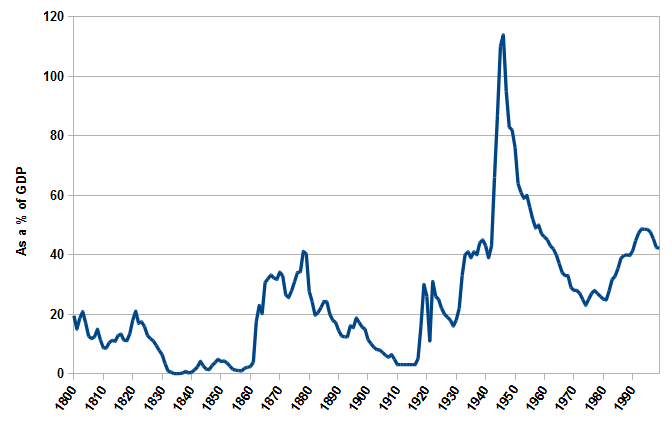
Do these symptoms sound familiar? They should. For instance, just last week Congress and President Obama raised our national debt ceiling to $14,300,000,000,000. Our forcasted GDP for 2010 is about the same (±$14.5 trillion). Not since WWII has our national debt even come close to reaching our annual GDP. Pretty scary since we won't have the luxury of an EU bailout.

Friday, February 12, 2010

Thursday, February 11, 2010
Tuesday, February 9, 2010
Sunday, February 7, 2010
Tea Anyone?
 There has been much ado this week regarding the Tea Party convention being held in Nashville, TN. Most pundits now agree that the Tea Party movement is a legitimate force; however, according to most media outlets, the organizers are having a hard time "getting their act together" and "forming a solid platform" with a "positive message." If that is the measure of a successful movement, then the GOP and the Democratic National Party both have a long way to go. What the pundits must understand is that the Tea Party movement has no formal leadership, is not trying to form a "solid platform," and is not attempting to provide a "positive message." This is a grass-roots movement which wants what Bostonian Samuel Adams did in 1773 - freedom from an oppressive and unresponsive government. This ideal is message enough, and does not require a platform.
NPR has a good article on the Tea Party convention and what they hope to accomplish.
Listen to it here.
Saturday, February 6, 2010
Free Trade and the Steel Industry, 1978
Dr. Milton Friedman gives a concise and lucid argument for international free trade at Utah State University in 1978.
Friday, February 5, 2010
Singapore: A Testament to Free Trade

The Discovery Channel is currently showing the "History of Singapore" on their HD Theater network. Among other things, the documentary shows how powerful freedom and free trade can be. Singapore, a small island (275 sq. miles) with no natural resources, has grown to become the 16th largest trading country in the world and 9th richest country in the world (GDP/capita).
If you can not catch in on HD Theater, you may watch the video online below.
Part Two
Part Three
Part Four
Part Five
Tuesday, February 2, 2010
Wise and Correct Taxation

“The wise and correct course to follow in taxation is not to destroy those who have already secured success, but to create conditions under which everyone will have a better chance to be successful.”
Calvin Coolidge, 30th President of the United States, 1923-1929
Saturday, January 30, 2010
Agree or Disagree
From Bryan Caplan at GMU, three rules for tolerance and honesty in the discussion of ideas:
1. Don't think less of people who sincerely disagree.
2. Do think less of people who insincerely agree.
3. Do think less of people who think less of people who sincerely disagree.
These are as useful in the business world as at GMU.
Friday, January 29, 2010
The Quotable Bastiat

"Who will dare to say that we have been gifted with strength, not to defend our rights, but to destroy the equal rights of our fellow-men?"
From "LAW, Spoilation by", in Cyclopædia of Political Science, Political Economy, and the Political History of the United States, edited by John J. Lalor, first published 1881.
Thursday, January 28, 2010
Get to Know the Boom and Bust
Check out the "Learn More" page at Econstories.tv. Books, articles, and podcasts on Keynes and Hayek.
Make sense of the mess in the modern world.
“The ideas of economists and political philosophers, both when they are right and when they are wrong, are more powerful than is commonly understood. Indeed the world is ruled by little else. Practical men, who believe themselves to be quite exempt from any intellectual influence, are usually the slaves of some defunct economist.”
John Maynard Keynes
Wednesday, January 27, 2010
Economics as Rap
Of all the battles confronting business, perhaps none is more important than the one in popular culture.
Movies, television, and music are powerful influences in shaping public opinion. Oliver Stone can convince more people than the Warren Commission. More people listen to music than read textbooks.
With that perspective in mind, enjoy what may well be the finest example of deep thinking and popular culture, an imaginary rap between the two economists Freidrich Hayek and John Keynes.
Hayek and Keynes held contrasting views of economic policy. Hayek was an advocate of the free market and warned of the dangers caused by easy money and interventionist government policy. Keynes advocated more government intervention to stimulate the economy and liberate it from the control of "animal spirits."
Watch. Enjoy. Learn.
Tuesday, January 26, 2010
An Old Lie
 It is hard to believe that the party of President Obama is a direct descendant of the party of Thomas Jefferson.
In a letter to Thomas Cooper in 1802, Jefferson wrote, "If we can prevent the government from wasting the labors of the people, under the pretence of taking care of them, they must become happy."
Is there any better example of the unreliable nature of political parties? How the party of Jefferson became the party publicly committed to "taking care of" people is a lesson in the weakness of political virtue.
But perhaps the fault lies not in the party, but in the people. Perhaps political parties will become whatever kind of party people want the most.
This appears to be Jefferson's view, for in his letter to Cooper, he does not say we must prevent political parties, businesses, or religious institutions from "wasting the labors of the people." He specifically warns against government.
Today, we joke that the phrase "I'm from the government, and I'm here to help you" is one of most popular lies in the world. Reading Jefferson, we see that it is also one of the oldest.
Sunday, January 24, 2010
Buzz Saw
On the fast-fading topic of health care, President Obama said:
"We've gotten pretty far down the road, but I have to admit, we've run into a bit of a buzz saw along the way. The long process of getting things done runs headlong into the special interests, their armies of lobbyists, and partisan politics aimed at exploiting fears instead of getting things done. And the longer it's taken, the uglier the process has looked."
In other words, "Some people dared to disagree."
In business, if the consumer disagrees, you change the product or try another consumer. You do not whine about those who disagree. You do not press them to change their mind in the name of "getting things done."
In fact, business flourishes when consumers disagree. More room for the rest of us, you see. You don't like Starbucks' coffee? How about Seattle's Best, Coffee People, Timothy's, Gloria Jean's, Cafe Altura, Eight O'Clock, Douwe Egberts, Lavazza, Folgers, Jeremiah's Pick, Emeril's, Aloha Island, Gevalia, Wolfgang Puck's, Maxwell House, Yuban, All Day Gourmet, Dunkin Donuts, Peet's, Caribou, Van Houtee...need I go on?
But, if you don't like a particular piece of legislation, you have no choice, nowhere else to go. You have no choice but to resist or accept, and that is hardly a choice. That is the choice of a prisoner or a slave, not the choice of a consumer.
No wonder the President ran into a "buzz saw." We all might breath easier if only there were more of them out there.
Saturday, January 23, 2010
Power as Product
 All is fair, when power is the only product, when power is the only justification for existence, when achieving power is a zero-sum game that must be won at all costs.
Witness the political landscape in the United States. Political parties aren't competing for voters; they are competing for power. Voters are merely the means to an end.
Political parties aren't really interested in ideas, either. Ideas are just another means to an end.
Finally, political parties aren't really interested in you. You are just the means to an end.
As George Orwell wrote in 1984, "The Party seeks power entirely for its own sake. We are not interested in the good of others; we are interested solely in power. Not wealth or luxury or long life or happiness: only power, pure power."
What kind of power? Power over the lives of others. Power over their property. Power to make them do what they don't want to do.
Not the kind of power that says "Don't kill" or "Don't steal" or "Don't cheat." Political parties seek the kind of power that says, "You will die" or "I will steal from you" or "I will lie to you," and "you can't stop me."
If it is wise to be skeptical about the claims of business, it is even wiser to be skeptical about the claims of politicians and their parties, even the ones we like. At least consumers have a choice. Voters get stuck with the results for years.
Friday, January 22, 2010
Money on the Dark Side of the Moon
As is often the case, I recently had music playing in the background at my house. This particular morning I had Pink Floyd's Dark Side of the Moon record playing (yes, among other forms of media, I listen to records). As some of you know, the song Money is the first song on side two of the album. As I dropped the needle, it occurred to me that, even though the word "money" has a specific meaning to me in economic terms, I had never really studied the lyrics to this well-known song. So I dared to examine what "money" means to songwriter and bassist Roger Waters of Pink Floyd - at least what it meant to him in the early 1970's when he wrote the song.
By 1973, Pink Floyd had already recorded eight albums, including a movie soundtrack and a #1 album in 1970 called Atom Heart Mother. Therefore, it is safe to assume that when the song was written, Roger Waters was already struggling with his new found fame, and enjoying the money that accompanies a #1 album release.  Now, I am not a lyricist by any means, and I may very well be interpreting the song completely wrong. Nevertheless, with the historical context in place, here is my amateur interpretation of Money by Pink Floyd.
Artist: Pink Floyd
Album: Dark Side of the Moon
Lyrics by: Roger Waters
Click here for to see it performed in London in 1994.
___________________________________________
Original lyrics in bold font
Layman interpretation of the lyrics in normal font
Money, get away
Get a good job with more pay
And you're okay
At first, money is good and it is allows you to live comfortably.
Money, it's a gas
Grab that cash with both hands
And make a stash
Life becomes fun once you have a little disposable income.
New car, caviar, four star daydream
Think I'll buy me a football team
Once you become wealthy, your wants become a little more expensive - sometimes they seem absurd (i.e. buying a football team). But, who are we to judge him on his wants.
Money get back
I'm all right Jack
Keep your hands off my stack
With wealth comes friends, agents, managers, and obligations. These people are normally looking for an easy handout.
Money, it's a hit
Don't give me that
Do goody good b&ll$h!t
There are no shortage of suggestions as to how you should spend your money. Even though keeping your money for yourself is considered "greedy" to some.
I'm in the hi-fidelity
First class traveling set
And I think I need a Learjet
It's funny how wants become needs. He "wanted" a football team, and now he "needs" fancy luggage and a Learjet to match. However, again, who are we to judge him on his wants and needs - it's his money.
Money, it's a crime
Share it fairly
But don't take a slice of my pie
Once you become rich, it is easy to judge others and tell them how to live and spend their money, but leave his lifestyle out of it - remember it's his success.
Money, so they say
Is the root of all evil
Today
But if you ask for a rise
It's no surprise that they're
Giving none away
Those who do not have money, and some that do, point to money as the "root of all evil." But, if you notice, they rarely part with theirs. It's fairly easy to sit back judge others based on what they do (or don't do) with their money. But, in reality, it is their money, and they should be allowed to spend it on football teams, matching luggage, Learjets, or maybe even give it all away to charity. Besides, the common man enjoys watching football, making luggage, and building Lear jets.
In the end, money is not the "root of all evil"; however, mandating what one does with their money is not far from it.
______________________________________________________________
A quick note: In a 1987 interview, Roger Waters was asked, "Apart from [being successful as a band] what were the main problems associated with such immense success?"
"Mainly the one of what to do with all the money!" he answered, "You go through this thing where you think of all the good you could do with it by giving it away. But, in the end, you decide to keep it!"
Thursday, January 21, 2010
To Preserve a Free Society

“If we wish to preserve a free society, it is essential that we recognize that the desirability of a particular object is not sufficient justification for the use of coercion”
Friedrich August von Hayek
Wednesday, January 20, 2010
Same Old Idea
 Coming soon, from the kind of progressive thinking that brought you "the worst car in history."
"Reliable, no-frills health care."
"Health care designed to make new economic sense."
"Everybody needs health care sometime."
and the marketing slogan that says it all...
"Introducing the same old idea."
Honestly, you can't make this stuff up.
As the Economist writes, "The idea of a reliable, no-frills car from an exotic source attracted millions of dollars’ worth of media coverage.
The only flaw was the car itself. Even after strenuous efforts to raise quality control at the Zastava plant, it was still hopelessly unreliable, and obsolete by the standards of the modern auto industry. The verdict of outside commentators was damning and unanimous. For the price of a new Yugo, consumers would find a second-hand car (of almost any kind) better value."
Tuesday, January 19, 2010
The Moral Choice
"Suppose, for example, that someone is a devout Muslim who is anxious to have as many people as possible bow to Mecca three times a day; to him let us suppose this is the highest moral act. But if he wields coercion to force everyone to bow to Mecca, he is thereby depriving everyone of the opportunity to be moral — to choose freely to bow to Mecca. Coercion deprives a man of the freedom to choose and, therefore, of the possibility of choosing morally."
Murray Rothbard, For a New Liberty, pages 104-105.
Monday, January 18, 2010
IEA Climate Change Debate
From the London-based Institute of Economic Affairs, the granddaddy of free-market think tanks and one founded by a business intellectual.
Videos of the presentations at the IEA Climate Change Debate are available. The participants discussed the question: “Do Science and Economics Support Government Action on Climate Change?”
Each speaker provided a different perspective on the economics or the science. Debating the topic (in the order of the videos below) were: Prof. Fred Singer from Science and Environmental Policy Project; Nigel Lawson from The Global Warming Policy Foundation; Prof. Mike Hulme from the University of East Anglia; and Dr. Sam Frankhauser from the London School of Economics.
You can play the individual speeches or play a video of all four speakers.
Prof. Fred Singer
Nigel Lawson
Prof. Mike Hulme
Dr. Sam Frankhauser
All Four Speakers
Sunday, January 17, 2010
When in Doubt, Blame a Banker
Below is an interview with Treasury Secretary Timothy Geithner regarding the proposed Bank Tax. Among other things, it exposes the fact that the federal government obviously made no provisions to recoup TARP funds. However, when the Troubled Asset Relief Program was passed, I remember them saying it was an "investment" and that taxpayers would "benefit" in the long-run. Well, now the government is turning to their old friend (taxes) to vilify and punish the banking industry.
The first question that came to my mind was, what about the banks that were forced to take TARP funds? For example, according to former BB&T CEO John Allison, BB&T did not request nor did they want TARP funds. However, they, among several other healthy and responsible banks, were summoned into a closed-door meeting with the Treasury Department and essentially forced to receive funds. This was in an effort to hide which banks were stable and which were on the brink of failure. Naturally, BB&T was among the first to repay their TARP funds. Therefore, it doesn't seem "fair" (to use the parlance of our times) that they should now be taxed for receiving the TARP funds? The more obvious question may be, what about the other industries which received bailouts? Shouldn't we tax the automobile or the insurance industries? Or should we continue rewarding GM for continuing to fail?
At one point, all the TARP recipients were "too important to fail." Obviously they are not too important to vilify and throw under the bus. Or was that the point? Maybe the plan all along was to bail out the important industries in order to rob them of their sovereignty and enable the federal government to use them as political punching bags, fiscal scapegoats, and enact targeted policy in the name of taxpayer fairness. Okay, maybe that wasn't the plan, but it sure is becoming a very convenient strategy for the current administration.
Well, enough from me - see a sample of the interview below, and click on the link to read the entire transcript.
From MoneyControl.com
In an exclusive interview, Treasury Secretary Timothy Geithner, discusses the reason behind this move. He also talks about the risk of a double-dip recession and the unemployment rate.
Q: Jamie Dimon said you should not have tax policy that punishes individual firms.
A: This policy is not designed to punish. It is designed to meet the simple, practical, legal obligation, and we are doing it in a way, I think, it makes economic sense because we are doing it in a way that is, in effect, a tax on leverage, it is a tax on risk in some ways, and it is borne by the people that benefited most from the crisis. That seems fair.
Q: Do you have any concern that this tax will have any damaging effect on the economy, on lending? And if not, why not make it higher, since we have got a rather large budget deficit right now?
 A: Let me start with the second. The ultimate costs of solving this financial crisis are going to be dramatically lower than anybody thought was possible. But a financial crisis like this caused a lot of damage, there is still going to be some cost. But the legal obligation is to make sure we cover that cost. So, conservative estimates, the cost of the crisis may be in the range of USD 100 million, slightly higher. So this is designed to make sure we cover those costs. That is why we did the size this way.
Click here for the entire interview.
Saturday, January 16, 2010
Plunder
The law can be an instrument of equalization only as it takes from some persons and gives to other persons. When the law does this, it is an instrument of plunder.
~ The Law, by Frederic Bastiat
Below is a sampling of new or revised tax proposals since the Fall of 2009:
- Reinstate 36 and 39.6 percent rates for high-income taxpayers
- Reinstate personal exemption phaseout and limitation on itemized deductions for high-income taxpayers
- Impose 20 percent rate on capital gains and dividends for high-income taxpayers
- Limit value of itemized deductions to 28%
- Reduce the tax gap and make reforms
- Tax carried interest as ordinary income
- Codify “economic substance” doctrine
- Reform U.S. international tax system
- Repeal first-in-first-out (FIFO)
- .15% Tax on banking profits to repay TARP
- Climate revenues (i.e. Cap and Trade)
Friday, January 15, 2010
Close to Nature
Most of the commentary on the situation in Haiti understandably focuses on the immediate effects of the earthquake. We are deeply disturbed by the suffering of our fellow human beings.
But there is a larger, longer running tragedy at work here. We call it poverty. Poverty is what "being close to nature" really looks like.
Behind the popular romance of nature as a pretty park where happy creatures play lurks the awful truth. Nature is not cruel, but it is clumsy, indifferently stumbling over land and people alike.
We can only love such a thing after we have contained its potential to do us harm. That does not come from prayers and worship; it comes from wealth and the security that wealth provides.
Earthquake relief does not make a nation wealthy. Wealth comes from the peaceful and profitable trade of individuals.
Until Haitians can securely own and trade property, they will continue to face the harrowing prospect of one disaster after another, one relief program after another, with no end in sight.
Thursday, January 14, 2010
The Long Shadow of Frédéric Bastiat
 "Frédéric Bastiat's legacy has two key components: his artful polemics for free markets and his uncompromising conviction that men's interests are "naturally harmonious" to the extent that their property rights are respected. He was an artist with an unfailing loyalty to logic, and a revolutionary who fought the interventionist schemes of both the Right and Left despite suffering from a debilitating terminal illness."
From "The Long Shadow of Frédéric Bastiat" by George Smith, at Mises Daily.
Wednesday, January 13, 2010


Monday, January 11, 2010
John Stossel on Ayn Rand
Given the topic of our last meeting, last week's episode of "Stossel" on the Fox Business channel was rather timely. Thanks to Dr. Jennifer Baker for a fantastic presentation, and also reminding me to post this link.
Parts 2-6 can be found here.
Sunday, January 10, 2010
An Intellectual Adventure
"It may be that a free society as we have known it carries in itself the forces of its own destruction, that once freedom has been achieved it is taken for granted and ceases to be valued, and that the free growth of ideas which is the essence of a free society will bring about the destruction of the foundations on which it depends. There can be little doubt that in countries like the United States the ideal of freedom today has less real appeal for the young than it has in countries where they have learned what its loss means. On the other hand, there is every sign that in Germany and elsewhere, to the young men who have never known a free society, the task of constructing one can become as exciting and fascinating as any socialist scheme which has appeared during the last hundred years. It is an extraordinary fact, though one which many visitors have experienced, that in speaking to German students about the principles of a liberal society one finds a more responsive and even enthusiastic audience than one can hope to find in any of the Western democracies. In Britain also there is already appearing among the young a new interest in the principles of true liberalism which certainly did not exist a few years ago.
Does this mean that freedom is valued only when it is lost, that the world must everywhere go through a dark phase of socialist totalitarianism before the forces of freedom can gather strength anew? It may be so, but I hope it need not be. Yet, so long as the people who over longer periods determine public opinion continue to be attracted by the ideals of socialism, the trend will continue. If we are to avoid such a development, we must be able to offer a new liberal program which appeals to the imagination. We must make the building of a free society once more an intellectual adventure, a deed of courage. What we lack is a liberal Utopia, a program which seems neither a mere defense of things as they are nor a diluted kind of socialism, but a truly liberal radicalism which does not spare the susceptibilities of the mighty (including the trade unions), which is not too severely practical, and which does not confine itself to what appears today as politically possible. We need intellectual leaders who are willing to work for an ideal, however small may be the prospects of its early realization. They must be men who are willing to stick to principles and to fight for their full realization,however remote. The practical compromises they must leave to the politicians. Free trade and freedom of opportunity are ideals which still may arouse the imaginations of large numbers, but a mere "reasonable freedom of trade" or a mere "relaxation of controls" is neither intellectually respectable nor likely to inspire any enthusiasm.
The main lesson which the true liberal must learn from the success of the socialists is that it was their courage to be Utopian which gained them the support of the intellectuals and therefore an influence on public opinion which is daily making possible what only recently seemed utterly remote. Those who have concerned themselves exclusively with what seemed practicable in the existing state of opinion have constantly found that even this had rapidly become politically impossible as the result of changes in a public opinion which they have done nothing to guide. Unless we can make the philosophic foundations of a free society once more a living intellectual issue, and its implementation a task which challenges the ingenuity and imagination of our liveliest minds. But if we can regain that belief in the power of ideas which was the mark of liberalism at its best, the battle is not lost. The intellectual revival of liberalism is already underway in many parts of the world. Will it be in time?"
From "The Intellectuals and Socialism" by F. A. Hayek, 1949
Saturday, January 9, 2010
Why I Drive
1. Jonah Goldberg writes accurately of air travel outside of first class...
"The petty humiliations, the routine deceptions from airline employees desperate to rid themselves of troublesome travelers (“Oh, they can definitely help you at the gate!”), the stress-position seats, the ever-changing rules for what can and cannot be in your carry-on, being charged for food that the Red Cross would condemn if it were served at Gitmo: Air travel is the most expensive unpleasant experience in everyday life outside the realm of words ending in -oscopy."
2. While the TSA adds more frustration than security...
3. Finally, once glamorous air travel has become a bus system with wings.
Not entirely a business, not entirely an organ of the state, not profitable, not credit-worthy, not reliable, not customer friendly, not consistent, rewarding to run but not to invest in, the airline industry is everything you would expect from an economic arrangement that encourages the same kind of moral behavior you find on French farms and in dictatorships receiving large amounts of foreign aid.
Friday, January 8, 2010
Bubble Warning
from the Economist
The False Boom In 2008, falling markets caused a vicious circle of debt defaults and fire sales by investors, pushing asset prices down even further. The market rebound was necessary to stabilize economies last year, but now there is a danger that bubbles are being created.
[The] more immediate risks may be posed by fiscal policy. Many governments responded to the crisis by, in effect, taking the debt burden off the private sector’s balance-sheets and putting it on their own. This caused a huge gap to open up in government finances. Deficits in America and Britain, for instance, stand at more than 10% of GDP.
The Real Bust
Markets have already tested the ability of the weakest governments to bear the burden of their debt. Dubai had to turn to its wealthy neighbor, Abu Dhabi, for help. In the euro zone, doubts have been raised about the willingness of Greece to push through the required austerity measures. Electorates are likely to chafe at the cost of bringing down government deficits, especially if the main result is to repay foreign creditors. That will lead to currency crises and cross-border disputes like the current spat between Iceland, Britain and the Netherlands over the bill for compensating depositors in Icelandic banks. Such disputes will lead to further outbreaks of market volatility.
Investors tempted to take comfort from the fact that asset prices are still below their peaks would do well to remember that they may yet fall back a very long way. The Japanese stock market still trades at a quarter of the high it reached 20 years ago. The NASDAQ trades at half the level it reached during dot-com mania. Today the prices of many assets are being held up by unsustainable fiscal and monetary stimulus. Something has to give.
Read the Entire Article Here
Thursday, January 7, 2010
No Apology Necessary
"The truth is that capitalism has not only multiplied population figures but at the same time improved the people’s standard of living in an unprecedented way. Neither economic thinking nor historical experience suggest that any other social system could be as beneficial to the masses as capitalism. The results speak for themselves. The market economy needs no apologists and propagandists. It can apply to itself the words of Sir Christopher Wren’s epitaph in St. Paul’s: Si monumentum requires, circumspice." [“If you seek his monument, look around.”]11
Ludwig von Mises, Human Action
Tuesday, January 5, 2010
Bastiat Society Meeting - January 6th
 Please join us in welcoming Dr. Jennifer Baker from the College of Charleston. She will be discussing her recent paper published in the Journal of Libertarian Studies, entitled:
"Money is the Product of Virtue: Tensions in Rand's Invocation of Market Success"
Please RSVP by emailing us here (bastiatsociety@gmail.com).
About Dr. Jennifer Baker:
Jennifer Baker is a graduate of Brown University (B.A. in Philosophy and Political Science, 1995) and the University of Arizona (Ph.D., 2003).
Her research is on virtue ethics, and she looks to ancient ethical theories as positive examples of how ethics ought to be done today. She teaches courses on ethical and political theory, environmental ethics and philosophy, business ethics, bioethics, and American philosophy.
Saturday, January 2, 2010
The Quotable Bastiat
 Voulez-vous que la loi remédie à tout ? C’est impossible ; il faudrait alors dire qu’un marchand qui attend, pour vendre son café, son sucre, de meilleurs temps, nuit à la société ; il faudrait donc invoquer toujours la loi, toujours l’État !
Discours sur la répression des coalitions industrielles
"Do you want the law to cure everything? It is impossible; in that case, we must say that a merchant who waits for a better time to sell his coffee or his sugar harms society. Then we must always invoke the law and call upon the state to intervene."
Speech on the Suppression of Industrial Combinations