


 Free Market or Bust
From the Economist Online Edition:
What has gone wrong? Cuba’s state-owned farms are massively inefficient, and rarely provide more than 20% of the country’s food needs. Three hurricanes in 2008 made matters worse. Raúl Castro has acknowledged the problem, and introduced some changes. Idle state land has been leased to private farmers. The government has raised the guaranteed prices it pays for produce. Farmers can now legally buy their own basic equipment such as shovels and boots, without having to wait for government handouts.
READ the entire story here
Wednesday, March 31, 2010
Down on the Farm in Cuba

Sunday, March 21, 2010
I.M.F. Warns Wealthy Nations on Debt
From the New York Times - March 21, 2010 The global economic crisis has left “deep scars” in the fiscal balances of the world’s advanced economies, which should begin to rein in spending next year as the recovery continues, the No.2 official at the International Monetary Fund said Sunday in Beijing.
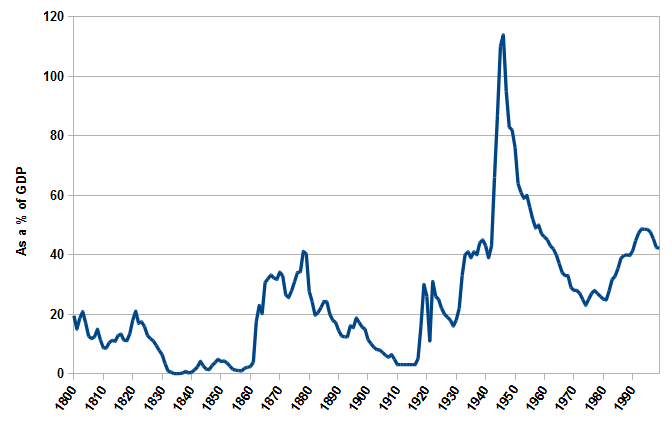
In a speech at the China Development Forum in Beijing, the I.M.F. official, John Lipsky, who is the deputy managing director, offered a grim prognosis for the world’s wealthiest countries, which are at a level of indebtedness not seen since the aftermath of World War II.
The ratio is expected to be close to or to exceed 100 percent for five members of the Group of 7 countries — Britain, France, Italy, Japan and the United States — by 2014. Canada and Germany are the other G-7 members.
Click here to see the entire article
Click here for our "Debt Clock" ... (Warning- This is scary)
Thursday, March 4, 2010
John Stossel - March 25th

We will be partnering with the Initiative for Public Choice and Market Process (IPCMP) for our next meeting. As part of the IPCMP's Adam Smith week, we welcome John Stossel of the Fox Business Network to Charleston.
His lecture, "Freedom and its Enemies" will take place on March 25th at 7pm at the Physicians Auditorium.
For more information on this event, and to see the entire schedule for Adam Smith Week, click here.
All events are free and open to the public.
The Physicians Auditorium is located at the corner of Glebe St and George St on the College of Charleston's Campus.
Monday, February 15, 2010
The House That Uncle Sam Built

Please join us in welcoming Dr. Peter Boettke. Peter is a professor for the Study of Capitalism at the Mercatus Center & Professor of Economics at George Mason University.
His topic for us will be:
"The House That Uncle Sam Built"
When:
February 16th
Reception begins at 6pm
Speaker at 7pm
Where:
The Harbor Club
35 Prioleau Street
Charleston, SC
Please RSVP by emailing us here: bastiatsociety@gmail.com
About Dr. Peter Boettke:
Peter J. Boettke is the Deputy Director of the James M. Buchanan Center for Political Economy, a Senior Research Fellow at the Mercatus Center, and a professor in the economics department at George Mason University. Boettke was born and raised in New Jersey. He received his BA in economics from Grove City College and his PhD in economics from George Mason University. Before joining the faculty at George Mason University in 1998, he held faculty positions at Oakland University, Manhattan College and New York University. In addition, Boettke was a National Fellow at the Hoover Institution for War, Revolution and Peace at Stanford University during the 1992-1993 academic year. He has been a visiting professor or scholar at the Russian Academy of Sciences in Moscow, the Max Planck Institute for Research into Economic Systems in Jena, Germany, the Stockholm School of Economics, Central European University in Prague and Charles University in Prague.
In 1998, Boettke assumed the editorship of the Review of Austrian Economics (Kluwer Academic Publishers). The Review of Austrian Economics was founded by late Murray Rothbard in mid-1980s to promote research and the further development of the Austrian School of Economics. Prior to assuming that editorship, Boettke was the editor of Advances in Austrian Economics. Since the mid-1990s, Boettke has also been the Director of the Advanced Summer Seminar in Austrian Economics, a post he took over from Israel Kirzner. Boettke is a former President of the Society for the Development of Austrian Economics.
Boettke is currently involved with the Global Prosperity Initiative, which is part of the Social Change Project at the Mercatus Center at George Mason University. GPI was founded with the purpose of encouraging an analytical narrative approach to the institutional analysis of development and transition studies. This research seeks to combine an ethnographic style of field research with the analytical structure of economic reasoning to explore the fundamental questions of why some nations are rich and others are poor, and the broad implications of globalization for the liberation of humanity from poverty.
Sunday, February 14, 2010
Fed Up Yet?
 From: Antony P. Mueller for Mises Daily
In persistent denial that it was ample liquidity in the first place that caused the present dire economic situation, the head of the Fed holds the view that "too little inflation" has been the true threat all along. Fear of deflation is Ben Bernanke's recurrent nightmare. In fact, his deflation worries form the basis of the so-called Bernanke doctrine, which says that the cure is monetary expansion and, consequently, holding interest rates as low as possible.
Read the entire article here.
Saturday, February 13, 2010
Our Big Fat Greek Future
From CNN.com The issues leading up to the government financial crisis in Greece:
- Years of unrestrained spending
- Cheap lending
- Failure to implement financial reforms
- Huge national debt
Do these symptoms sound familiar? They should. For instance, just last week Congress and President Obama raised our national debt ceiling to $14,300,000,000,000. Our forcasted GDP for 2010 is about the same (±$14.5 trillion). Not since WWII has our national debt even come close to reaching our annual GDP. Pretty scary since we won't have the luxury of an EU bailout.

Friday, February 12, 2010

Thursday, February 11, 2010
Tuesday, February 9, 2010
Sunday, February 7, 2010
Tea Anyone?
 There has been much ado this week regarding the Tea Party convention being held in Nashville, TN. Most pundits now agree that the Tea Party movement is a legitimate force; however, according to most media outlets, the organizers are having a hard time "getting their act together" and "forming a solid platform" with a "positive message." If that is the measure of a successful movement, then the GOP and the Democratic National Party both have a long way to go. What the pundits must understand is that the Tea Party movement has no formal leadership, is not trying to form a "solid platform," and is not attempting to provide a "positive message." This is a grass-roots movement which wants what Bostonian Samuel Adams did in 1773 - freedom from an oppressive and unresponsive government. This ideal is message enough, and does not require a platform.
NPR has a good article on the Tea Party convention and what they hope to accomplish.
Listen to it here.
Saturday, February 6, 2010
Free Trade and the Steel Industry, 1978
Dr. Milton Friedman gives a concise and lucid argument for international free trade at Utah State University in 1978.
Friday, February 5, 2010
Singapore: A Testament to Free Trade

The Discovery Channel is currently showing the "History of Singapore" on their HD Theater network. Among other things, the documentary shows how powerful freedom and free trade can be. Singapore, a small island (275 sq. miles) with no natural resources, has grown to become the 16th largest trading country in the world and 9th richest country in the world (GDP/capita).
If you can not catch in on HD Theater, you may watch the video online below.
Part Two
Part Three
Part Four
Part Five
Tuesday, February 2, 2010
Wise and Correct Taxation

“The wise and correct course to follow in taxation is not to destroy those who have already secured success, but to create conditions under which everyone will have a better chance to be successful.”
Calvin Coolidge, 30th President of the United States, 1923-1929
Saturday, January 30, 2010
Agree or Disagree
From Bryan Caplan at GMU, three rules for tolerance and honesty in the discussion of ideas:
1. Don't think less of people who sincerely disagree.
2. Do think less of people who insincerely agree.
3. Do think less of people who think less of people who sincerely disagree.
These are as useful in the business world as at GMU.
Friday, January 29, 2010
The Quotable Bastiat

"Who will dare to say that we have been gifted with strength, not to defend our rights, but to destroy the equal rights of our fellow-men?"
From "LAW, Spoilation by", in Cyclopædia of Political Science, Political Economy, and the Political History of the United States, edited by John J. Lalor, first published 1881.
Thursday, January 28, 2010
Get to Know the Boom and Bust
Check out the "Learn More" page at Econstories.tv. Books, articles, and podcasts on Keynes and Hayek.
Make sense of the mess in the modern world.
“The ideas of economists and political philosophers, both when they are right and when they are wrong, are more powerful than is commonly understood. Indeed the world is ruled by little else. Practical men, who believe themselves to be quite exempt from any intellectual influence, are usually the slaves of some defunct economist.”
John Maynard Keynes
Wednesday, January 27, 2010
Economics as Rap
Of all the battles confronting business, perhaps none is more important than the one in popular culture.
Movies, television, and music are powerful influences in shaping public opinion. Oliver Stone can convince more people than the Warren Commission. More people listen to music than read textbooks.
With that perspective in mind, enjoy what may well be the finest example of deep thinking and popular culture, an imaginary rap between the two economists Freidrich Hayek and John Keynes.
Hayek and Keynes held contrasting views of economic policy. Hayek was an advocate of the free market and warned of the dangers caused by easy money and interventionist government policy. Keynes advocated more government intervention to stimulate the economy and liberate it from the control of "animal spirits."
Watch. Enjoy. Learn.
Tuesday, January 26, 2010
An Old Lie
 It is hard to believe that the party of President Obama is a direct descendant of the party of Thomas Jefferson.
In a letter to Thomas Cooper in 1802, Jefferson wrote, "If we can prevent the government from wasting the labors of the people, under the pretence of taking care of them, they must become happy."
Is there any better example of the unreliable nature of political parties? How the party of Jefferson became the party publicly committed to "taking care of" people is a lesson in the weakness of political virtue.
But perhaps the fault lies not in the party, but in the people. Perhaps political parties will become whatever kind of party people want the most.
This appears to be Jefferson's view, for in his letter to Cooper, he does not say we must prevent political parties, businesses, or religious institutions from "wasting the labors of the people." He specifically warns against government.
Today, we joke that the phrase "I'm from the government, and I'm here to help you" is one of most popular lies in the world. Reading Jefferson, we see that it is also one of the oldest.
Sunday, January 24, 2010
Buzz Saw
On the fast-fading topic of health care, President Obama said:
"We've gotten pretty far down the road, but I have to admit, we've run into a bit of a buzz saw along the way. The long process of getting things done runs headlong into the special interests, their armies of lobbyists, and partisan politics aimed at exploiting fears instead of getting things done. And the longer it's taken, the uglier the process has looked."
In other words, "Some people dared to disagree."
In business, if the consumer disagrees, you change the product or try another consumer. You do not whine about those who disagree. You do not press them to change their mind in the name of "getting things done."
In fact, business flourishes when consumers disagree. More room for the rest of us, you see. You don't like Starbucks' coffee? How about Seattle's Best, Coffee People, Timothy's, Gloria Jean's, Cafe Altura, Eight O'Clock, Douwe Egberts, Lavazza, Folgers, Jeremiah's Pick, Emeril's, Aloha Island, Gevalia, Wolfgang Puck's, Maxwell House, Yuban, All Day Gourmet, Dunkin Donuts, Peet's, Caribou, Van Houtee...need I go on?
But, if you don't like a particular piece of legislation, you have no choice, nowhere else to go. You have no choice but to resist or accept, and that is hardly a choice. That is the choice of a prisoner or a slave, not the choice of a consumer.
No wonder the President ran into a "buzz saw." We all might breath easier if only there were more of them out there.
Saturday, January 23, 2010
Power as Product
 All is fair, when power is the only product, when power is the only justification for existence, when achieving power is a zero-sum game that must be won at all costs.
Witness the political landscape in the United States. Political parties aren't competing for voters; they are competing for power. Voters are merely the means to an end.
Political parties aren't really interested in ideas, either. Ideas are just another means to an end.
Finally, political parties aren't really interested in you. You are just the means to an end.
As George Orwell wrote in 1984, "The Party seeks power entirely for its own sake. We are not interested in the good of others; we are interested solely in power. Not wealth or luxury or long life or happiness: only power, pure power."
What kind of power? Power over the lives of others. Power over their property. Power to make them do what they don't want to do.
Not the kind of power that says "Don't kill" or "Don't steal" or "Don't cheat." Political parties seek the kind of power that says, "You will die" or "I will steal from you" or "I will lie to you," and "you can't stop me."
If it is wise to be skeptical about the claims of business, it is even wiser to be skeptical about the claims of politicians and their parties, even the ones we like. At least consumers have a choice. Voters get stuck with the results for years.
Subscribe to:
Posts (Atom)