


Thursday, November 25, 2010

Wednesday, November 24, 2010
Monday, November 22, 2010
Sunday, November 21, 2010
Holiday Message from the TSA
Lonely this holiday season? Find an intimate friend at the TSA.
Via SNL, click here.
Saturday, November 20, 2010
Thursday, November 18, 2010
Wednesday, November 17, 2010
Tuesday, November 16, 2010
Monday, November 15, 2010
Even Secretariat Understood Death Tax’s Cruelty - Deroy Murdock - National Review Online
Saw this movie this weekend. Loved it.
Read more here.
Sunday, November 14, 2010

The Last Boom Town in America

Imperial Athens. Imperial Rome. Imperial Washington. Centers of power and, therefore, money. Power is Washington's product, and the more power it has, the more money it attracts.
As Washington gains power and wealth, it grows as an obstacle to production and innovation in the rest of the nation. Silicon Valley is just outside of San Francisco. LA produces world-class entertainment. What does Washington produce? Very little that does not depend on spending other people's money and telling them how to live.
As my hero Bastiat might have said, Washington is no longer a town that uses law to protect men and their property, it uses law to plunder both.
Why is Washington now home to 7 of the 10 richest counties in the United States? Because it is better to be the plunderer than the plundered.
Monday, November 8, 2010
Science? Politics? Both?
"This group feels strongly that science and politics can't be divorced and that we need to take bold measures to not only communicate science but also to aggressively engage the denialists and politicians who attack climate science and its scientists," said Scott Mandia, professor of physical sciences at Suffolk County Community College in New York.
"We are taking the fight to them because we are … tired of taking the hits. The notion that truth will prevail is not working. The truth has been out there for the past two decades, and nothing has changed."
Read more.
Saturday, November 6, 2010
Progress Q & A
"China has also pulled off a breathtaking economic transformation which will soon see it become the mightiest economic power in the world. It will challenge American hegemony as never before in modern times."
Read more: John Humphrys, in the Daily Mail
Question: How did China pull off its breathtaking economic transformation?
Answer: By encouraging markets more and using government less.
Question: How might a country pull off a breathtaking economic decline?
Answer: By doing the exact opposite.
Thursday, November 4, 2010
Wednesday, November 3, 2010
Politics: That Which Is Seen
Why do we spend so much time talking about politics and elections?
The vast majority of the really important decisions that we make as try to improve our lives have nothing to do with who wins and who loses elections. The technological innovations that will change our lives don't, either.
In fact, the work that makes the world better doesn't occur in legislatures. It occurs in homes, offices, factories, and all the other places where individuals trade what they know with each other.
Unfortunately, all that trade is too small to matter. It's not big enough, splashy enough, or noisy enough to get attention.
Politics is everything that trade is not. Politics is big, splashy, and noisy. We can see politics, whether we like it or not. In an election year, we can't avoid it.
Trade is almost invisible.
It's easy to overestimate the importance of something that is all about overstating its importance.
Monday, November 1, 2010
Sunday, October 31, 2010
The Power to Tax
 According to the 2011 "Business Tax Climate" published by the Tax Foundation:
1. Worst state in the union for business taxes: New York.
2. Best state in the union for business taxes: South Dakota.
3. Most improved: Illinois.
4. Heading down fast: New Mexico.
5. At risk: Washington State
Full report here.
Saturday, October 30, 2010
Just Don't Say No, Sometimes
Life is too short to say no to every cheeseburger you meet, even if your name is Michelle Obama.
Friday, October 29, 2010
You Know I'm Right
Michelle Caruso-Cabrera, anchor and reporter at CNBC; discusses her new book, You Know I'm Right.
Thursday, October 28, 2010
Beware the Intellectuals
So one of the lessons of our century is: Beware the intellectuals. Not merely should they be kept well away from the levers of power, they also should be objects of peculiar suspicion when they seek to offer collective advice. Beware committees, conferences, leagues of intellectuals! For intellectuals, far from being highly individualistic and nonconformist people, are in fact ultra-conformist within the circles formed by those whose approval they seek and value. This is what makes them, en masse, so dangerous, because it enables them to create cultural climates, which themselves often generate irrational, violent and tragic courses of action.
Paul Johnson, "The Heartless Lovers of Humankind"
Wednesday, October 27, 2010
Their Righteous Cause

"The greatest evils inflicted upon humanity have been the work of those who are so confident of their efforts to do good that they do not hesitate to use the instruments of evil available to them on behalf of their righteous cause."
Vincent Ostrom
Tuesday, October 26, 2010
Monday, October 25, 2010
Consumer Protection
This is a story about consumer abuse.
A consumer signs a contract he is told will make his life better. He pays $60,000 per year for three years, and ends up unhappy with the results. The promises of the original contract remain unfulfilled. He asks for his money back. He is denied.
The product? A law degree. The promise? A job. The response? You've got to be kidding. We don't give anybody their money back. What do you think this is, a business?
Read more here.
Sunday, October 24, 2010
The Biases of Bureaucrats
"[While] there is a lot of interest in the psychology and neuroscience of markets, there is much less in the psychology and neuroscience of government. Slavisa Tasic, of the University of Kiev, wrote a paper recently for the Istituto Bruno Leoni in Italy about this omission. He argues that market participants are not the only ones who make mistakes, yet he notes drily that "in the mainstream economic literature there is a near complete absence of concern that regulatory design might suffer from lack of competence." Public servants are human, too.
Mr. Tasic identifies five mistakes that government regulators often make: action bias, motivated reasoning, the focusing illusion, the affect heuristic and illusions of competence."
Matt Ridley, in the Wall Street Journal
Saturday, October 23, 2010
Tea Party to the Rescue
"Maureen "Moe" Tucker, former drummer of the Velvet Underground, has done the best job ever of explaining where the tea party stands and why it stands there. She also suggests the breadth and variety of the movement. In an interview this week in St. Louis's Riverfront Times, Ms. Tucker said she'd never been particularly political but grew alarmed by the direction the country was taking. In the summer of 2009, she went to a tea-party rally in southern Georgia. A chance man-on-the-street interview became a YouTube sensation. No one on the left could believe this intelligent rally-goer was the former drummer of the 1960s breakthrough band; no one on the left understood that an artist could be a tea partier. Because that's so not cool, and the Velvet Underground was cool.
Ms. Tucker, in the interview, ran through the misconceptions people have about tea partiers: "that they're all racists, they're all religious nuts, they're all uninformed, they're all stupid, they want no taxes at all and no regulations whatsoever." These stereotypes, she observed, are encouraged by Democrats to keep their base "on their side." But she is not a stereotype: "Anyone who thinks I'm crazy about Sarah Palin, Bush, etc., has made quite the presumption. I have voted Democrat all my life, until I started listening to what Obama was promising and started wondering how the hell will this utopian dream be paid for?"
Peggy Noonan, in the Wall Street Journal
Here's the video...
Wednesday, October 20, 2010
The Quotable Bastiat
 "I do not address myself to those philosophers who, if not in their own names, at least in the name of humanity, profess to adore poverty.
I speak to those who hold wealth in esteem -- and understand by this word, not the opulence of the few, but the comfort, the well-being, the security, the independence, the instruction, the dignity of all."
Economic Sophisms, Second Series, "Natural History of Spoilation"
Je ne m'adresse pas à ces philosophes qui font profession d'adorer la misère, sinon en leur nom, du moins au nom de l'humanité.
Je parle à quiconque tient la Richesse pour quelque chose. — Entendons par ce mot, non l'opulence de quelques-uns, mais l'aisance, le bien-être, la sécurité, l'indépendance, l'instruction, la dignité de tous.
Sophismes Économiques, Physiologie de la Spoliation
Wednesday, October 6, 2010
It's Non-Fiction... Unfortunately
In a theater near you on October 15th.
For more information, visit: http://www.iwantyourmoney.net/
Tuesday, October 5, 2010
A Real Printing Problem
 from NPR:
by Chana Joffe-Walt
This is a story about how an economist and his buddies tricked the people of Brazil into saving the country from rampant inflation. They had a crazy, unlikely plan, and it worked.
Twenty years ago, Brazil's inflation rate hit 80 percent per month. At that rate, if eggs cost $1 one day, they'll cost $2 a month later. If it keeps up for a year, they'll cost $1,000.
In practice, this meant stores had to change their prices every day. The guy in the grocery store would walk the aisles putting new price stickers on the food. Shoppers would run ahead of him, so they could buy their food at the previous day’s price.
The problem went back to the 1950s, when the government printed money to build a new capital in Brasilia. By the 1980s, the inflation pattern was in place.
It went something like this:
1. New President comes in with a new plan.
2. President freezes prices and/or bank accounts.
3. President fails.
4. President gets voted out or impeached.
5. Repeat.
The plans succeeded at only one thing: Convincing every Brazilian the government was helpless to control inflation.
There was one more option that no one knew about. It was dreamed up by four guys at the Catholic University in Rio. The only reason they enter the picture now — or ever — is because in 1992, there happened to be a new finance minister who knew nothing about economics. So the minister called Edmar Bacha, the economist who is the hero of our story.
____________________________________________________
Listen to the story HERE.
Sunday, September 19, 2010
Bastiat Reference in Chicago Tribune
"[In Chicago] the 5 percent sales tax forgiveness on back-to-school purchases last month, as study after study confirms, only shifts spending from other time frames with no net gain in sales. Ditto for last year's dollop — cash for clunkers — and this year's homebuyer tax credit.
In each of these examples, a politician or legislative body was either seeking to do good — reduce energy consumption, make something more affordable or put more money in workers' pockets — or was perhaps duped by, or just pandering to, a special-interest group or constituency.
As 19th century French economist Frederic Bastiat put it, "There is only one difference between a bad economist and a good one: The bad economist confines himself to the 'visible' effect; the good economist takes into account both the effect that can be seen and those effects that must be 'foreseen.'
The same bad vs. good demarcation holds for political candidates, city halls, lawmakers and public agencies."
Allen R. Sanderson of the University of Chicago, Chicago Tribune
Sunday, September 5, 2010
Labor (verb):
1a : expenditure of physical or mental effort especially when difficult or compulsory
b (1) : human activity that provides the goods or services in an economy (2) : the services performed by workers for wages as distinguished from those rendered by entrepreneurs for profits
_____________________________________________________
A thought on labor:
Your labor is your most valuable asset: Capitalism compensates you for it, and socialism steals it from you.
Enemies of freedom and liberty often accuse entrepreneurs and capitalists of "exploiting" the working-class. Profits and greed, they argue, inevitably pit the employer and employee against each other. Nothing could be farther from the truth. Yet, contempt for the employer and fear are the tools socialists use to spread their own ideals. Once the workers are convinced that capitalism is evil, they then look to the government for the wealth and security that capitalism once provided.
Below are some various quotes regarding labor, wages, and profit. As you read them, ask yourself which group (capitalists or socialists) truly value the worker, the product of their labor, and the entrepreneurial spirit:
_____________________________________________________
"On the basis of political economy itself, in its own words, we have shown that the worker sinks to the level of a commodity and becomes indeed the most wretched of commodities; that the wretchedness of the worker is in inverse proportion to the power and magnitude of his production..."
- Karl Marx (1844) on the Political Economy
"We have stopped thinking in terms of a minimum wage. That belongs to yesterday, before we quite knew what paying high wages meant. Now so few people get the minimum wage that we do not bother about it at all. We try to pay a man what he is worth and we are not inclined to keep a man who is not worth more than the minimum wage."
- Henry Ford (1912) on Minimum Wages
"To establish, that in cases of even one unexcused day's absence from work, the worker should be fired from the enterprise or establishment, with loss of the right to use ration and commodity cards issued to him as a worker in said enterprise or establishment, and likewise with loss of the right to use an apartment given him in the housing of said enterprise or establishment."
- Resolution of the Central Executive Committee and the Council of People's Commissars of the USSR (1932)
“We do want more, and when it becomes more, we shall still want more. And we shall never cease to demand more until we have received the results of our labor.”
- Samuel Gompers, leader and first President of the American Federation of Labor (AFL) (1850-1924)
"Rather, it has been the risk-takers, the doers, the makers of things -- some celebrated, but more often men and women obscure in their labor -- who have carried us up the long rugged path towards prosperity and freedom."
- Barrak Obama (Jan 8th, 2009)
"Reckless greed and risk taking … must never endanger our prosperity again"
- Barrak Obama (Jan 20th, 2009) (Notice the contradiction...?)
"I think myself that we have more machinery of government than is necessary, too many parasites living on the labor of the industrious."
- Thomas Jefferson (1743-1826) on the role of government
"These capitalists generally act harmoniously and in concert, to fleece the people."
- Abraham Lincoln (1809-1865)
"Opportunity is missed by most people because it is dressed in overalls and looks like work."
- Thomas Edison (1847-1931) on hard work and commitment
"The people who are doing the work are the moving force behind the Macintosh. My job is to create a space for them, to clear out the rest of the organization and keep it at bay.
- Steve Jobs, CEO of Apple (1955- )
"Particular obstructive workers who refuse to submit to disciplinary measures will be subject, as non-workers, to discharge and confinement in concentration camps."
- Article 9 of a decree, signed by Lenin (14 November 1919)
"No one would have any argument with government, provided that his person was respected, his labor was free, and the fruits of his labor were protected against all unjust attack. When successful, we would not have to thank the state for our success. "
- Frederic Bastiat (1850) The Law
Saturday, September 4, 2010
Trade Makes Us Less Likely to Kill
Michael Shermer writes in the Huffington Post:
"Trade makes us less likely to kill our potential trading partners. As Jared Diamond once told me about his research on Papua New Guinea hunter-gatherers: "Should you happen to meet an unfamiliar person in the forest, of course you try to kill him or else to run away. Our modern custom of just saying hello and starting a friendly chat would be suicidal." And yet something happened in the 1960s to bring about more peaceful interactions. Initially, peace was imposed upon the native New Guineans by fiat from the Western colonial government that ruled over the territory, but officials then insured continued peace by providing goods that the people needed, as well as the technologies to enable them to continue producing more resources on their own. In less than one generation, New Guinean hunter-gatherers who were fighting each other with stone tools were suddenly New Guinean consumer-traders operating computers, flying planes, and running their own small businesses. Where goods crossed New Guinea frontiers, New Guinea armies did not.
This is an example from my book of what I call Bastiat's Principle, from an observation by the 19th-century French economist Frédéric Bastiat: "Where goods do not cross frontiers, armies will." Although trade is not a sure-fire prophylactic against between-group conflict (there are exceptions to Thomas Friedman's observation that two countries with MacDonalds don't fight, but as a first order approximation it is accurate), it is an integral component to establishing trust between strangers that lessens the potential volatility that naturally exists whenever groups come into contact with one another, especially over the allocation of scare resources that have alternative uses, the very definition of economics.
And that brings us back full circle to trade, markets, and morality."
Monday, August 30, 2010
Thursday, August 12, 2010
Sunday, July 18, 2010
Wednesday, June 30, 2010
Saturday, June 26, 2010
The Quotable Bastiat
"The State is also subject to Malthus’s Law. It tends to exceed the level of its means of existence, it expands in line with its means and what keeps it in existence is the substance of the people. Misfortune thus afflicts those peoples who cannot limit the sphere of action of the State. Freedom, private activity, wealth, well-being, independence and dignity will all disappear."
Via http://bastiat.net/en/
Thursday, June 24, 2010
A Radical Obesity Hypothesis
Part One: Where food is hard to get, expensive, and it tastes bad, very few people get fat.
Part Two: Where food is plentiful, affordable, and it tastes good, lots of people get fat.
Monday, June 21, 2010
What Went Wrong at BP
"BP put form over substance and took their eye off the ball. Beyond Petroleum was a failed corporate strategy that resulted in heedless, dumb cost-cutting that put profits losses ahead of people and the environment.
Reality can be a harsh mistress. BP went after an environmental fad, basked in the glow of the Left environmental movement, and now may have destoyed itself in the process. As with Enron, another ‘progressive’ ‘green’ company, the Left environmentalists got what they deserved.
If only John Browne had given a Lee Raymond-type speech and had conducted BP’s business in the manner of its more reality-grounded brethren. The blame for the fatal attraction goes deep, and it lands at the doorstep of the mainstream environmental movement that got BP into greenwashing."
Rob Bradley, at MasterResource, a free-market energy blog.
Sunday, June 20, 2010
Markets Are Like Wives

Markets are like wives. They will tell you what to do, but you won't always like what you hear.
The Conversation by Henri Matisse, 1908-1912. Source: State Hermitage Museum
Tuesday, June 15, 2010
The Free Dictionary
Organized Crime noun [awr-guh-nahyzd krahym]
1. Interstate theft that occurs within a centrally controlled formal structure.
2. The people and the groups involved in such criminal activities; e.g., the Mafia in Sicily and the Legislature in the United States.
Tuesday, April 13, 2010
Cutting Communism - One Head at a Time

Cuba continues to be in the news. It appears that Raul Castro understands the pitfalls of communism more than his brother. First, Raul lifted restrictions on Cuban farmers, now he is letting Cuban barbershops work for profit.
Questions:
Can the U.S. re-learn the benefits of a free market from Cuba? Or will the lessons learned there fall on deaf ears?
Why does the media portray capitalism as evil in free societies, yet celebrate when communist countries turn capitalistic?
___________________________________________________
By Michael Voss BBC News, Havana
Cuba is turning over hundreds of state-run barber shops and beauty salons to employees in what may be the start of a long-expected privatisation drive.
All barbers and hairdressers in shops with three seats or fewer will be allowed to rent the space and pay taxes instead of getting a monthly wage.
The retail sector has long been derided for poor service and rampant theft.
The country's former President, Fidel Castro, nationalised all small businesses in 1968.
'Slow and cautious'
Now his younger brother and successor Raul Castro is trying to modernise the system without jumping to full-scale capitalism.
Other communist countries such as China and Vietnam have long since pushed through market reforms while maintaining political control.
President Castro's first economic reforms involved giving unproductive state-owned land to private farmers.
Some taxi drivers are allowed to work for themselves.
This is his first attempt to deal with shops in the retail and service sector.
It is likely to be a gradual process, though.
These beauty salon changes have not been officially announced or mentioned in the state-controlled press.
In a recent speech to the Young Communist League, Raul Castro acknowledged that people were impatient for change but warned that he planned to move slowly and cautiously.
Saturday, April 10, 2010
Destruction as Development
How could anyone confuse the violence and destruction of war and natural catastrophe with economic development? Because they concentrate only on what they can see, and they ignore what they cannot...
From the Atlas Network
Friday, April 2, 2010
Haven't We Learned Anything?
 In a recent op-ed piece, Fritz Hollings (former senator from South Carolina), touted that we should stop trying to save money in order to pay for Medicare. Instead, his brilliant solution is to create a VAT tax. Just 1% tax - what could be the harm...? Oh, and another 2% to pay down the debt.
History lesson - Our first income tax was only 7% (top bracket). Forty years later it was 92%.
Economics lesson - VAT taxes, tariffs, etc, do in fact increase the price of imported goods. It is not a "free lunch."
A 3% VAT tax would only open up yet another floodgate of government spending at our expense. Instead, I have a nifty idea: Cut government spending.
_____________________________________________________
"We shouldn't be wasting time waiting to see whether we can save $500 billion from Medicare. The 1 percent VAT can guarantee that health care reform can either be paid for or the extra money used to pay down the debt. Then the other 2 percent VAT should be dedicated to paying down the debt.
For those nervous about taxes, let's vote. Any voting against this approach will be voting against paying for health care, against paying down the debt, against relieving Corporate America of income taxes, against promoting exports by 32 percent, against stemming the flow of off-shoring jobs, and voting against middle-class jobs and saving the economy of the United States."
- Ernest "Fritz" Hollings
Read the entire op-ed here.
Thursday, April 1, 2010
Che Guevara - Killer Chic

From Reason.TV
“We’re rightly horrified by fascist murderers like Adolph Hitler,” says reason.tv’s Nick Gillespie. “Why aren’t we also horrified by communist killers?” Certainly, Che’s body count isn’t anywhere near Hitler’s. But what about someone Che idolized, someone whom he might have liked to wear on his chest?
“Che, Castro, all the communist regimes idolized only one thing that Mao personifies—violence.” Kai Chen grew up in China under the reign of Mao Zedong. Although he won gold medals for China’s national basketball team, Chen’s was far from the celebrity life of an NBA star. Says Chen, “You have no right to talk, and you have no right to think.”
And yet, like Che, Mao’s image is becoming an increasingly popular way to move merchandise. You can buy Mao t-shirts, mugs, caps—you name it. Near Chen’s Los Angeles home there’s even a restaurant called Mao’s Kitchen. “Can you imagine a restaurant called Hitler’s Kitchen?” asks Gillespie.
Wednesday, March 31, 2010
Down on the Farm in Cuba
 Free Market or Bust
From the Economist Online Edition:
What has gone wrong? Cuba’s state-owned farms are massively inefficient, and rarely provide more than 20% of the country’s food needs. Three hurricanes in 2008 made matters worse. Raúl Castro has acknowledged the problem, and introduced some changes. Idle state land has been leased to private farmers. The government has raised the guaranteed prices it pays for produce. Farmers can now legally buy their own basic equipment such as shovels and boots, without having to wait for government handouts.
READ the entire story here
Sunday, March 21, 2010
I.M.F. Warns Wealthy Nations on Debt
From the New York Times - March 21, 2010 The global economic crisis has left “deep scars” in the fiscal balances of the world’s advanced economies, which should begin to rein in spending next year as the recovery continues, the No.2 official at the International Monetary Fund said Sunday in Beijing.
In a speech at the China Development Forum in Beijing, the I.M.F. official, John Lipsky, who is the deputy managing director, offered a grim prognosis for the world’s wealthiest countries, which are at a level of indebtedness not seen since the aftermath of World War II.
The ratio is expected to be close to or to exceed 100 percent for five members of the Group of 7 countries — Britain, France, Italy, Japan and the United States — by 2014. Canada and Germany are the other G-7 members.
Click here to see the entire article
Click here for our "Debt Clock" ... (Warning- This is scary)
Thursday, March 4, 2010
John Stossel - March 25th

We will be partnering with the Initiative for Public Choice and Market Process (IPCMP) for our next meeting. As part of the IPCMP's Adam Smith week, we welcome John Stossel of the Fox Business Network to Charleston.
His lecture, "Freedom and its Enemies" will take place on March 25th at 7pm at the Physicians Auditorium.
For more information on this event, and to see the entire schedule for Adam Smith Week, click here.
All events are free and open to the public.
The Physicians Auditorium is located at the corner of Glebe St and George St on the College of Charleston's Campus.
Monday, February 15, 2010
The House That Uncle Sam Built

Please join us in welcoming Dr. Peter Boettke. Peter is a professor for the Study of Capitalism at the Mercatus Center & Professor of Economics at George Mason University.
His topic for us will be:
"The House That Uncle Sam Built"
When:
February 16th
Reception begins at 6pm
Speaker at 7pm
Where:
The Harbor Club
35 Prioleau Street
Charleston, SC
Please RSVP by emailing us here: bastiatsociety@gmail.com
About Dr. Peter Boettke:
Peter J. Boettke is the Deputy Director of the James M. Buchanan Center for Political Economy, a Senior Research Fellow at the Mercatus Center, and a professor in the economics department at George Mason University. Boettke was born and raised in New Jersey. He received his BA in economics from Grove City College and his PhD in economics from George Mason University. Before joining the faculty at George Mason University in 1998, he held faculty positions at Oakland University, Manhattan College and New York University. In addition, Boettke was a National Fellow at the Hoover Institution for War, Revolution and Peace at Stanford University during the 1992-1993 academic year. He has been a visiting professor or scholar at the Russian Academy of Sciences in Moscow, the Max Planck Institute for Research into Economic Systems in Jena, Germany, the Stockholm School of Economics, Central European University in Prague and Charles University in Prague.
In 1998, Boettke assumed the editorship of the Review of Austrian Economics (Kluwer Academic Publishers). The Review of Austrian Economics was founded by late Murray Rothbard in mid-1980s to promote research and the further development of the Austrian School of Economics. Prior to assuming that editorship, Boettke was the editor of Advances in Austrian Economics. Since the mid-1990s, Boettke has also been the Director of the Advanced Summer Seminar in Austrian Economics, a post he took over from Israel Kirzner. Boettke is a former President of the Society for the Development of Austrian Economics.
Boettke is currently involved with the Global Prosperity Initiative, which is part of the Social Change Project at the Mercatus Center at George Mason University. GPI was founded with the purpose of encouraging an analytical narrative approach to the institutional analysis of development and transition studies. This research seeks to combine an ethnographic style of field research with the analytical structure of economic reasoning to explore the fundamental questions of why some nations are rich and others are poor, and the broad implications of globalization for the liberation of humanity from poverty.
Sunday, February 14, 2010
Fed Up Yet?
 From: Antony P. Mueller for Mises Daily
In persistent denial that it was ample liquidity in the first place that caused the present dire economic situation, the head of the Fed holds the view that "too little inflation" has been the true threat all along. Fear of deflation is Ben Bernanke's recurrent nightmare. In fact, his deflation worries form the basis of the so-called Bernanke doctrine, which says that the cure is monetary expansion and, consequently, holding interest rates as low as possible.
Read the entire article here.
Saturday, February 13, 2010
Our Big Fat Greek Future
From CNN.com The issues leading up to the government financial crisis in Greece:
- Years of unrestrained spending
- Cheap lending
- Failure to implement financial reforms
- Huge national debt
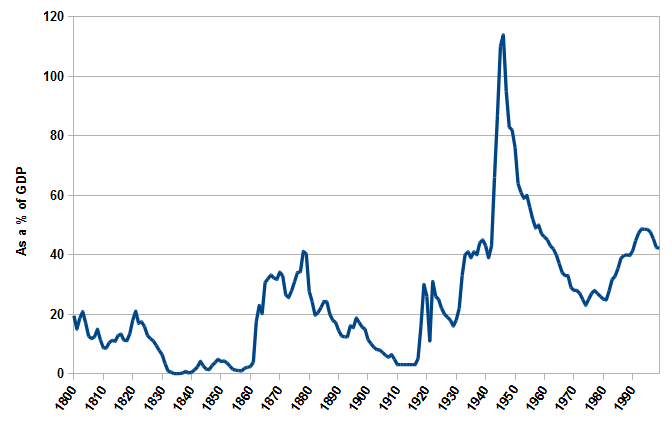
Do these symptoms sound familiar? They should. For instance, just last week Congress and President Obama raised our national debt ceiling to $14,300,000,000,000. Our forcasted GDP for 2010 is about the same (±$14.5 trillion). Not since WWII has our national debt even come close to reaching our annual GDP. Pretty scary since we won't have the luxury of an EU bailout.

Friday, February 12, 2010

Thursday, February 11, 2010
Tuesday, February 9, 2010
Sunday, February 7, 2010
Tea Anyone?
 There has been much ado this week regarding the Tea Party convention being held in Nashville, TN. Most pundits now agree that the Tea Party movement is a legitimate force; however, according to most media outlets, the organizers are having a hard time "getting their act together" and "forming a solid platform" with a "positive message." If that is the measure of a successful movement, then the GOP and the Democratic National Party both have a long way to go. What the pundits must understand is that the Tea Party movement has no formal leadership, is not trying to form a "solid platform," and is not attempting to provide a "positive message." This is a grass-roots movement which wants what Bostonian Samuel Adams did in 1773 - freedom from an oppressive and unresponsive government. This ideal is message enough, and does not require a platform.
NPR has a good article on the Tea Party convention and what they hope to accomplish.
Listen to it here.
Saturday, February 6, 2010
Free Trade and the Steel Industry, 1978
Dr. Milton Friedman gives a concise and lucid argument for international free trade at Utah State University in 1978.
Friday, February 5, 2010
Singapore: A Testament to Free Trade

The Discovery Channel is currently showing the "History of Singapore" on their HD Theater network. Among other things, the documentary shows how powerful freedom and free trade can be. Singapore, a small island (275 sq. miles) with no natural resources, has grown to become the 16th largest trading country in the world and 9th richest country in the world (GDP/capita).
If you can not catch in on HD Theater, you may watch the video online below.
Part Two
Part Three
Part Four
Part Five
Tuesday, February 2, 2010
Wise and Correct Taxation

“The wise and correct course to follow in taxation is not to destroy those who have already secured success, but to create conditions under which everyone will have a better chance to be successful.”
Calvin Coolidge, 30th President of the United States, 1923-1929